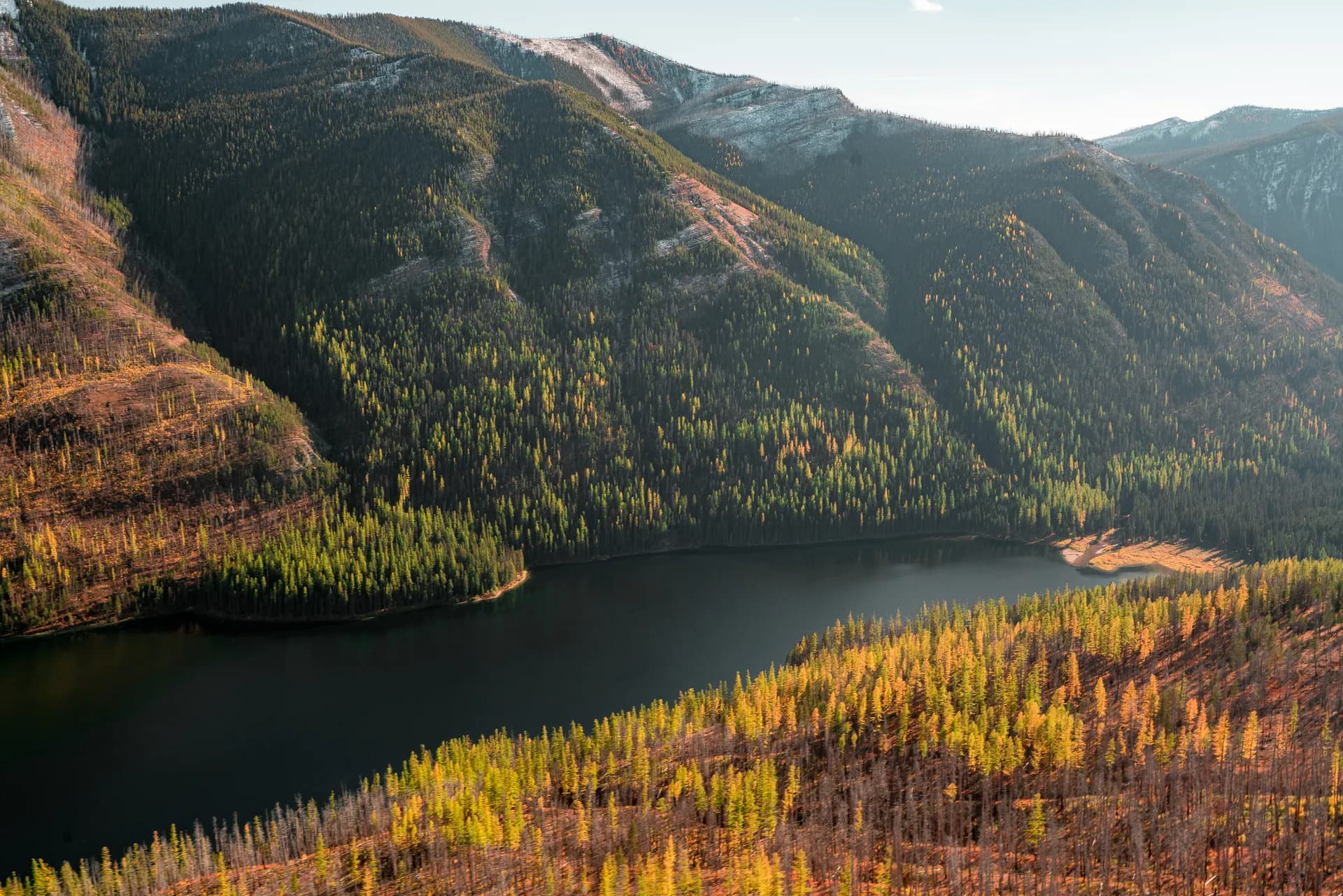
Bridger-Teton National Forest covers roughly 3.4 million acres across western Wyoming, making it one of the largest national forests in the contiguous United States. The forest wraps around Jackson Hole on three sides, shares a border with Grand Teton National Park, and extends south through the Wyoming Range and east toward the Wind River Mountains. This geography places it at the center of the Greater Yellowstone Ecosystem, one of the last intact temperate ecosystems on Earth. For anyone driving into Jackson on US-191 or US-26, the forest begins long before the town sign appears.
The scale here is hard to overstate. From the hot spring canyon at Granite Creek to the high granite plateaus of the Wyoming Range, from the slide-lake valleys of the Gros Ventre to the glaciated cirques of the Wind Rivers, Bridger-Teton holds more ecological variety than most states. The Snake River cuts through the forest's western edge, offering blue-ribbon fly fishing and float trips. Elk, moose, wolves, pronghorn, and grizzly bears all live here in self-sustaining populations. Jackson Hole Mountain Resort and Snow King sit within or adjacent to the forest boundary, giving it a year-round recreation identity that few national forests can match.
Why Bridger-Teton Stands Out
Wilderness at real scale. Five designated wilderness areas total more than 1.2 million acres inside the forest. The Bridger Wilderness alone covers 428,000 acres along the Wind River Range and contains over 1,300 lakes. The Gros Ventre Wilderness protects the rugged range east of Jackson. Wilderness here means no motorized equipment, no mountain bikes, and genuine solitude once you're a few miles past the trailhead.
Wildlife density. The Greater Yellowstone Ecosystem surrounds this forest, and the wildlife reflects it. Grizzly bear recovery in Wyoming has been a documented success story: the population that once numbered fewer than 150 animals now exceeds 700 in the ecosystem. Moose are common in riparian corridors. During September and October, elk bugling echoes through nearly every valley. Wolf packs are occasionally spotted in the Gros Ventre and Buffalo Fork drainages. Few places outside Alaska offer this concentration of large mammals.
Year-round access. While high-country trails close under snow from October through June, the forest never shuts down. Jackson Hole Mountain Resort and Snow King offer world-class skiing from November through April. Snowshoeing and cross-country skiing extend into the backcountry. The Snake River stays fishable for much of the year. This means Bridger-Teton serves a genuinely year-round visitor base, not just summer hikers.
Best Trails in Bridger-Teton National Forest
Granite Creek Falls Trail is the most accessible waterfall hike in the forest. The trailhead sits at the end of Granite Creek Campground, about 30 miles east of Jackson via US-189/191 and a dirt road. The walk to the falls is just one mile each way with minimal elevation gain, crossing a narrow granite canyon before opening onto a 30-foot cascade. The nearby Granite Creek Hot Spring, a developed soaking pool operated seasonally, makes this a natural double-feature stop. This trail works well for families or anyone wanting a short outing before dinner in Jackson.
Phelps Lake Loop combines a scenic mountain lake with Teton Range views and some of the best moose habitat in the Jackson Hole area. The 7-mile loop accesses the lake from the Death Canyon Trailhead inside Grand Teton National Park, but the trail passes into Bridger-Teton along the south shore. Phelps Lake sits at 6,600 feet with open shoreline views and a swimming beach popular with locals. The loop passes through dense willow habitat favored by cow moose and calves in early summer. Plan to arrive early on summer weekends: the trailhead lot fills by 9 AM.
Darby Canyon Wind Cave Trail sits on the Idaho-Wyoming border and accesses one of the more unusual geological features in the range. The trail climbs 5.4 miles round trip through a limestone canyon before reaching a large cave opening that exhales cold air during warm months and draws air inward in winter. The cave itself requires no technical gear to enter the entrance chamber. Wildflower displays in late June and July are exceptional along the canyon floor. This trailhead draws far fewer visitors than comparable hikes on the Wyoming side.
Table Mountain Trail is the benchmark strenuous objective in the Teton Range accessible from the Bridger-Teton side. The 12-mile round trip climbs 4,000 feet to a broad summit plateau that sits directly across the canyon from the Grand Teton's west face. The view from the top is the closest accessible look at the Teton peaks without technical climbing equipment. Plan a full day, carry extra layers, and start early to clear the exposed upper ridge before afternoon thunderstorms develop. This is a trail for hikers comfortable with sustained elevation gain at altitude.
Permits and Passes
Most of Bridger-Teton requires no permit for day hiking or overnight backpacking as of 2026. The Bridger Wilderness, Gros Ventre Wilderness, Teton Wilderness, Absaroka-Beartooth, and Winegar Hole Wilderness areas are all permit-free. No quota system is in place for the backcountry zones inside Bridger-Teton itself, though trailheads that share access with Grand Teton National Park require a valid GTNP entry pass.
The America the Beautiful Annual Pass (formerly National Parks Pass) covers entrance fees at Grand Teton and is accepted at some Forest Service fee sites. Veterans and active military may qualify for free passes. See America the Beautiful Pass for Veterans for details.
Float permits are required for commercial and some private trips on the Snake River through the canyon and upper sections. Contact the Jackson Ranger District well before your trip, as permit availability varies by season and section. Campground fees at developed sites generally run $10–$20 per night (as of 2026). Dispersed camping is free throughout most of the forest with a 16-day stay limit in any one location.
Camping
Atherton Creek Campground sits on the north shore of Lower Slide Lake in the Gros Ventre Valley, about 20 miles northeast of Jackson. The campground has 20 sites with vault toilets and a boat ramp. Pelicans and osprey work the lake surface during summer, and the Gros Ventre Slide geological area is a short drive away.
Curtis Canyon Campground perches on a bench above the National Elk Refuge with wide views of the Teton Range. At 11 sites, it stays less crowded than campgrounds closer to town. The elevation (about 6,600 feet) keeps temperatures cool even in July, and the evening light on the Tetons from this angle draws photographers.
Kozy Campground occupies a narrow bench above the Hoback River canyon, about 15 miles south of Jackson on US-191. Eight sites share vault toilets and creek access. The Hoback is a legitimate fishery for cutthroat trout, and the canyon walls keep the campground shaded and cool through midday.
Granite Creek Campground is the largest developed site in this section of the forest, with 52 sites spread along Granite Creek. The campground serves as the staging area for the Granite Creek Falls trail and puts hikers within a short walk of Granite Creek Hot Spring. Reserve early in summer: this campground fills most summer weekends.
When to Visit
High-country trails in Bridger-Teton typically open between late June and early July, depending on the previous winter's snowpack. July through September is the primary season, with warm days, accessible passes, and dry trail conditions at most elevations. Afternoon thunderstorms are common above treeline from mid-July through August. Plan to be off exposed ridges by early afternoon.
Fall (late September through mid-October) offers cooler temperatures, vivid aspen color in the lower valleys, and the elk rut. Bull elk bugling is audible throughout the Gros Ventre and Buffalo Fork drainages. Crowds thin significantly after Labor Day.
Wildfire smoke affects the region during dry years, typically July through September. Check air quality conditions at AirNow before planning strenuous days. Smoke from regional fires can settle into valley bottoms and persist for days. See Checking Conditions Before You Go for monitoring resources.
Winter access focuses on the resort areas, snow roads, and groomed cross-country ski trails near Jackson. Most forest roads close by November and reopen in May or June.
Getting There
From Jackson (primary): The forest begins at the edge of town. Cache Creek Trailhead is at the end of Cache Creek Drive in Jackson, accessible without a car. For the Granite Creek area, take US-191 south to Hoback Junction, then US-189 east about 10 miles to Granite Creek Road. For the Gros Ventre drainages, take the Gros Ventre Road east from the town of Kelly.
From Pinedale (south): Pinedale is the gateway to the Bridger Wilderness and Wind River Range. Take US-191 north or county roads east toward Big Sandy Lodge and the high-country trailheads. Drive time from Pinedale to most Wind River trailheads is 30 to 90 minutes depending on road conditions.
From Dubois (east): US-26/287 over Togwotee Pass (9,544 feet) provides access from the east through the Buffalo Fork and Teton Wilderness areas. Dubois is roughly 85 miles from Jackson. The pass itself closes seasonally during heavy snow.
Practical Tips
Bridger-Teton is grizzly bear country. Carry bear spray on every hike, regardless of trail length. Hike in groups of three or more when possible. Make noise on brushy or blind sections of trail, especially near water where bears may not hear you approach. Store all food, cookware, and scented items in a certified bear canister or the bear box provided at developed campgrounds. Review bear canister requirements before heading into the backcountry.
Moose are present throughout riparian areas and should be treated with respect. A cow moose with a calf is unpredictable. Give moose wide berth and do not approach for photos. An agitated moose will charge. If a moose charges, get behind a large tree or solid structure.
River crossings are a factor on many backcountry routes in June and early July when snowmelt keeps streams high. Trekking poles help with balance. Unbuckle your pack's hipbelt and sternum strap before crossing so you can shed the pack quickly if you fall.
Altitude affects most visitors arriving from lower elevations. Jackson sits at 6,200 feet. Many trailheads start at 7,000 to 8,000 feet, with destinations above 10,000 feet. Plan lighter exertion on your first day, drink water regularly, and plan rest days if you experience headache or fatigue. See Checking Conditions Before You Go for additional resources on trip planning.
For broader context on how national forest land differs from national parks (and what that means for your trip), see National Forest vs. National Park. For responsible travel practices in wilderness areas, review the Leave No Trace 7 Principles.