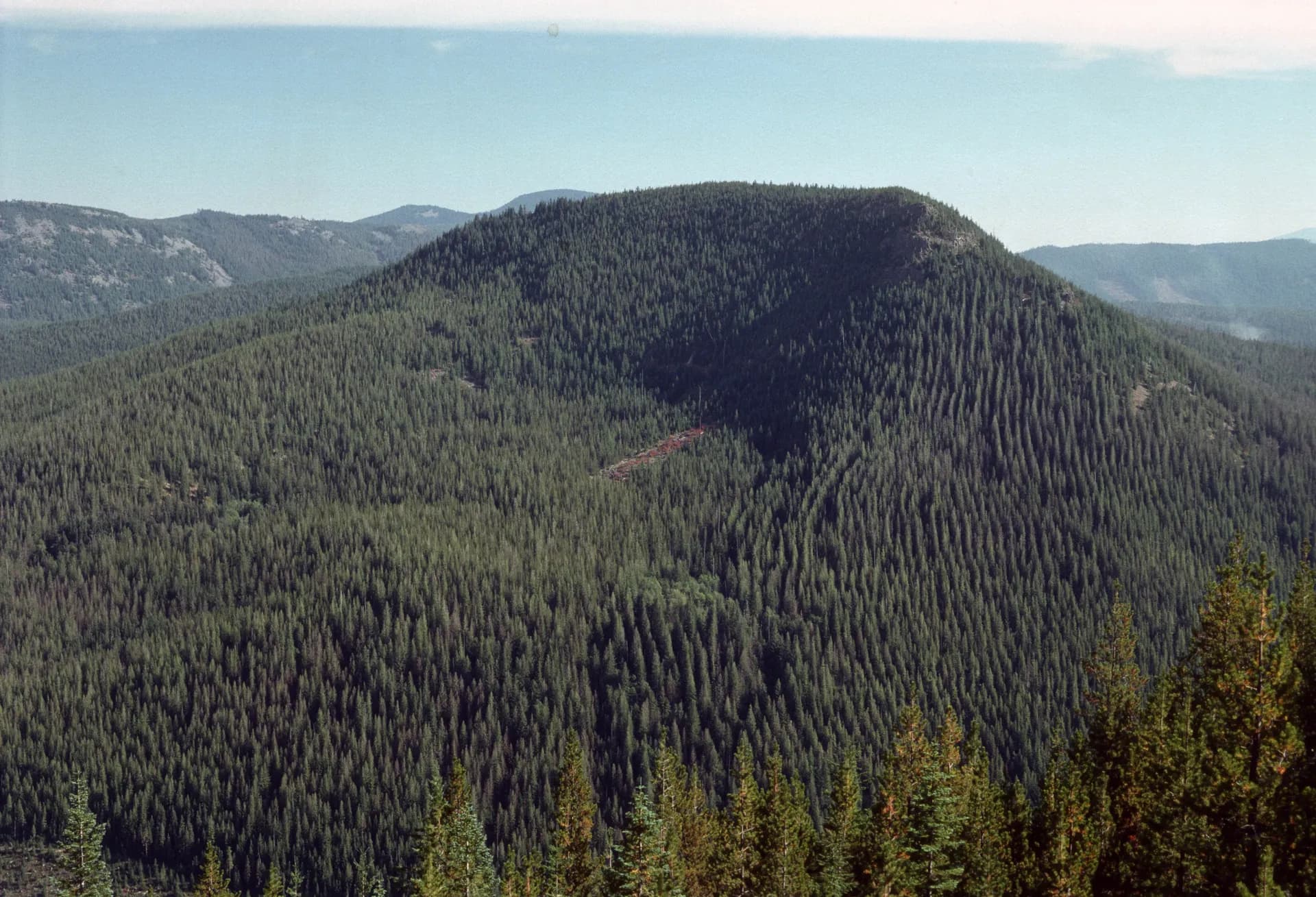
Deschutes National Forest covers nearly 1.6 million acres of central Oregon's high desert and Cascade Range. It's the kind of place where you can stand on a lava flow in the morning, summit a 10,000-foot volcano by afternoon, and camp beside an alpine lake that night. The forest stretches from the eastern slopes of the Cascades down into the ponderosa pine flats, and it borders Bend, one of the fastest-growing outdoor recreation towns in the country.
The forest was established in 1908 and has been a cornerstone of Pacific Northwest recreation ever since. If you're planning a trip to central Oregon, Deschutes is almost certainly where you'll end up spending most of your time.
Why Deschutes Stands Out
Central Oregon's volcanic geology makes Deschutes unlike any other national forest in the Pacific Northwest. The Three Sisters (North, Middle, and South) dominate the western skyline, each topping 10,000 feet. Black Crater, a cinder cone on the northeast flank of the Sisters, offers one of the best panoramic viewpoints in the range. South Sister, at 10,358 feet, is the most accessible Cascade volcano summit in Oregon. You don't need ropes or technical gear to reach the top, just strong legs and an early start.
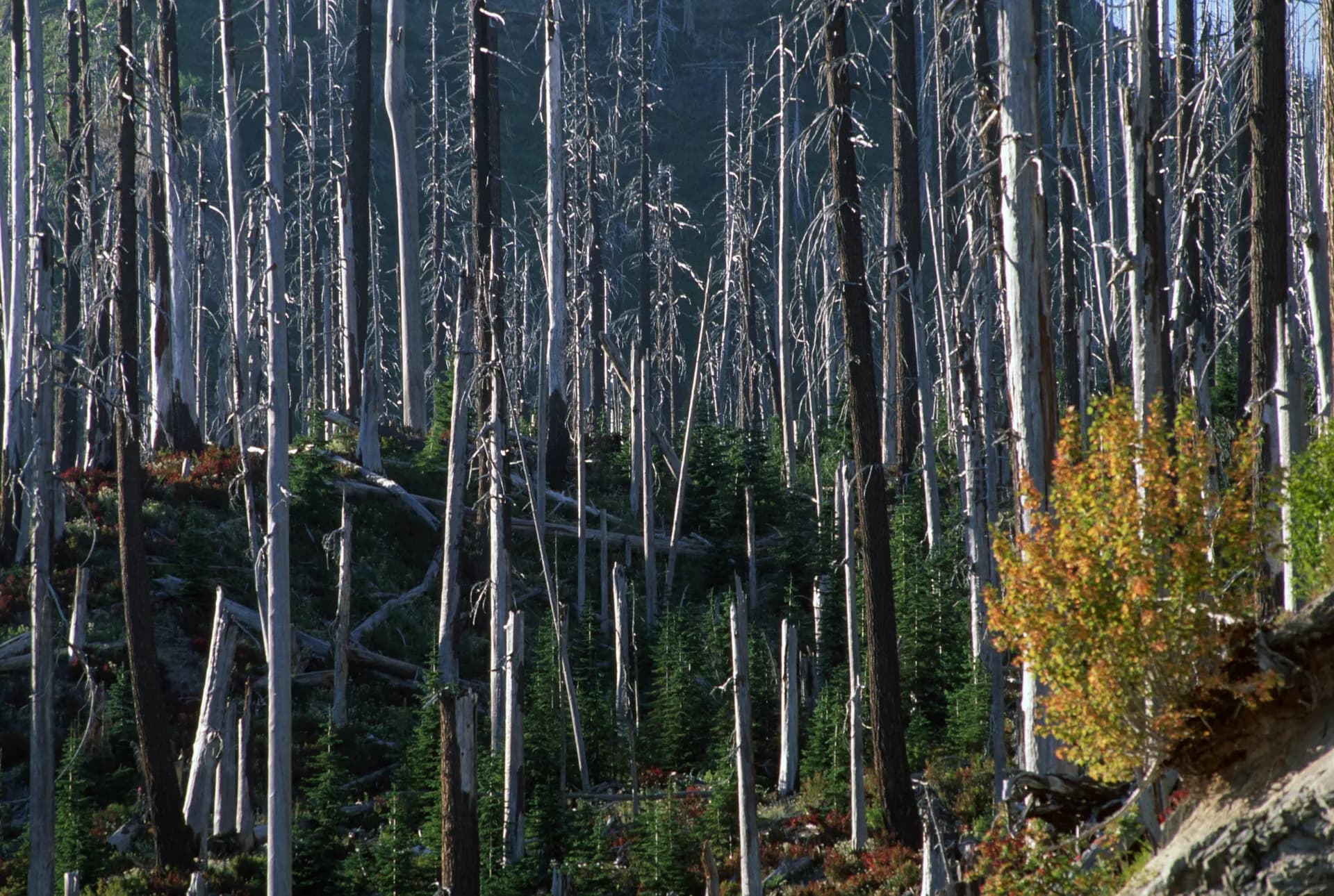
Beyond the peaks, the landscape is shaped by fire and eruption. Newberry Volcanic Monument sits on the forest's southern end, featuring the Big Obsidian Flow (a 1,300-year-old river of volcanic glass), Paulina Falls, and two crater lakes. The Lava Lands Visitor Center south of Bend offers a quick primer on the region's volcanic history, and Lava Butte provides 360-degree views from its summit.
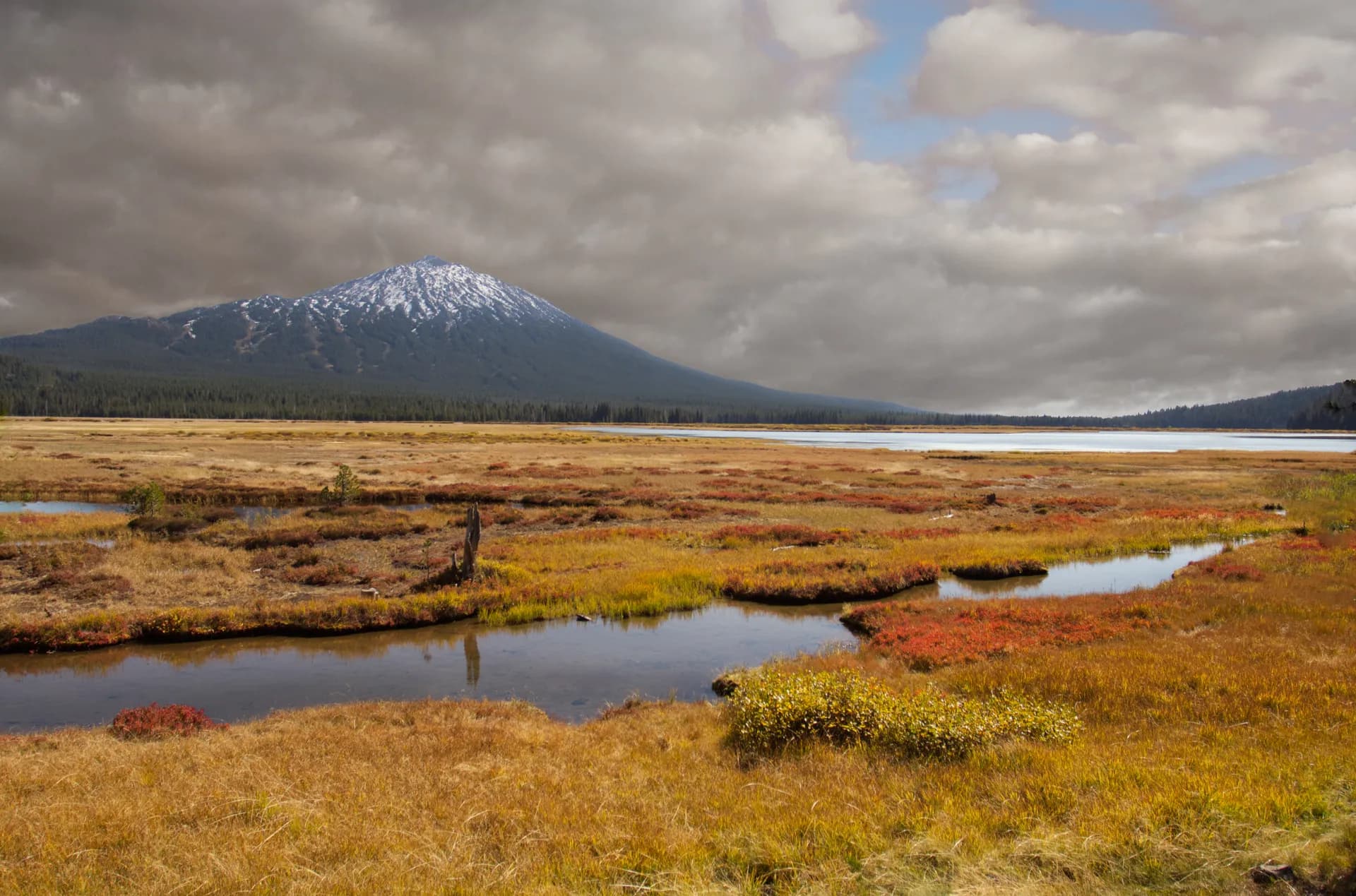
The forest also contains over 150 lakes and reservoirs. The Cascade Lakes Scenic Byway (Highway 46) runs 66 miles from Bend through the heart of this lake country, passing Sparks Lake, Elk Lake, Lava Lake, and Cultus Lake. Each has its own character: Sparks Lake is shallow and photogenic, Elk Lake is popular with sailboarders, and Cultus Lake has warmer water for swimming.
Best Trails in Deschutes National Forest
With over 1,600 miles of trails, from the cascading tiers of Proxy Falls to the gentle riverside path along the Fall River Trail, you could spend years here and not cover everything. Here are three of the best.
South Sister Summit
The crown jewel. This 12-mile out-and-back climbs 4,900 feet from Devils Lake Trailhead to the summit of Oregon's third-tallest peak. The route crosses through forest, past Moraine Lake, and then above treeline into a volcanic moonscape. Near the top, Teardrop Pool sits in the crater, one of the highest lakes in Oregon at about 10,200 feet. On a clear day, you can see from Mount Rainier to Mount Shasta. This is a full-day commitment (8 to 12 hours), and it requires a Central Cascades Wilderness Permit.
Green Lakes
A 9-mile out-and-back that gains a modest 1,100 feet of elevation to reach three alpine lakes sitting at 6,500 feet in a basin between South Sister and Broken Top. The lakes are a vivid blue-green color from glacial sediment. This is one of the most popular trails in the Three Sisters Wilderness, for good reason. The scenery is outstanding, and the difficulty is manageable for most hikers. Plan to arrive early: the trailhead lot fills fast, especially on weekends. A Central Cascades Wilderness Permit is required.
Tumalo Falls
The most accessible option, starting just 20 minutes from downtown Bend. This 7-mile out-and-back trail begins with a view of the 97-foot Tumalo Falls (visible from the parking area), then follows Tumalo Creek upstream past a series of smaller cascades. The total elevation gain is about 600 feet, making it suitable for families and casual hikers. Dogs are allowed on leash. A Northwest Forest Pass is required for parking, but no wilderness permit is needed.
Permits and Passes
Deschutes has a layered permit system, and it's worth understanding before you go. Our camping permit guide covers the basics for all national forests.
Northwest Forest Pass: Required at most developed trailheads and day-use areas throughout the forest. Costs $5 per day or $30 per year. The America the Beautiful Interagency Pass ($80/year) also works. You can buy passes at ranger stations, the Bend/Fort Rock Ranger District office, and many outdoor shops in Bend.
Central Cascades Wilderness Permit: Required for all day hikes and overnight trips in the Three Sisters, Mount Washington, and Mount Jefferson wilderness areas from late May through September. This is a limited-entry permit system managed through Recreation.gov. Day-use permits cost $1 per person per day. Overnight permits are also $1 per person per day but are harder to get. A portion of permits are released the morning of (at 7 AM Pacific, two days before your trip date), but popular trails like Green Lakes and South Sister sell out quickly. Book early if you can.
Newberry National Volcanic Monument Pass: A separate $5 per vehicle pass is required for sites within the monument, including the Big Obsidian Flow Trail, Paulina Falls, and the Paulina and East Lake areas.
Campfire Restrictions: Central Oregon is dry. The forest frequently implements campfire restrictions from mid-summer through fall. Check the Deschutes National Forest website or call the ranger station before your trip. Ignoring fire restrictions carries steep fines.
Camping
Deschutes offers everything from free dispersed camping to full-service campgrounds with flush toilets.
Todd Lake Campground is a small, free, first-come-first-served campground at 6,200 feet with walk-in tent sites near the lake. It's a beautiful spot but limited to 10 sites, and there's no potable water. The access road usually opens in early July.
Devils Lake Campground sits right at the South Sister and Green Lakes trailheads, making it a strategic base camp. It's also free, first-come-first-served, with 10 walk-in sites. No water. It fills up fast on summer weekends, often by Thursday evening.
Lava Lake Campground is a larger option (44 sites) on the shores of Lava Lake along the Cascade Lakes Highway. Sites are $18 per night and can be reserved through Recreation.gov. The campground has vault toilets and potable water. Lava Lake Lodge nearby has a small store and boat rentals.
Tumalo State Park, just 5 miles northwest of Bend on the Deschutes River, is the most developed option. It has 68 sites (tent and RV), hot showers, flush toilets, and a network of riverside trails. Sites run $20 to $34 per night depending on the type. Reserve through Oregon State Parks, especially for summer weekends.
For dispersed camping, look along Forest Roads 40, 42, and 46. Dispersed sites are free, but you must camp at least 200 feet from water and use existing fire rings where available. Some dispersed camping areas have been closed in recent years due to overuse, so check current regulations.
When to Visit
June through October is the main season. Snow lingers at higher elevations well into June, and some high-country trails (South Sister, Green Lakes) may not be fully snow-free until early to mid-July. The best window for alpine hiking is mid-July through September.
July and August bring the best weather: daytime highs in the 80s in Bend, cooler at elevation. Expect crowds. This is peak season, and popular trailheads fill before dawn on weekends.
September and October are the sweet spot if you can manage it. Crowds thin dramatically after Labor Day, the weather stays dry (usually), and fall colors appear in the aspens and larches. Nights get cold, dropping into the 20s and 30s at higher elevations.
Winter transforms the forest into a cross-country skiing and snowshoeing destination. The Virginia Meissner and Swampy Lakes Sno-Parks near Bend offer groomed Nordic trails. Cascade Lakes Highway closes for winter, typically from November through late May.
Getting There
Bend is the primary gateway. From Portland, it's about 175 miles (3 hours) via US-97 south from Madras, or 3.5 hours via US-20 through Sisters. From Eugene, take Highway 58 east over Willamette Pass (about 2.5 hours to Bend). Redmond Municipal Airport (RDM) has daily flights from Portland, Seattle, San Francisco, Denver, Los Angeles, and other cities. It's the easiest fly-in option for central Oregon.
Once you're in Bend, the forest is right outside town. The Cascade Lakes Highway (Highway 46) starts on Bend's west side and is your main corridor to trailheads, lakes, and campgrounds along the Cascades.
Practical Tips
Water: Always carry more water than you think you need, especially on the east side of the Cascades. The air is dry, the sun is intense at elevation, and dehydration sneaks up fast. For high-country hikes like South Sister, plan on at least 3 liters per person.
Sun protection: Central Oregon gets over 300 days of sunshine a year. At 6,000 to 10,000 feet, UV exposure is significantly stronger than at sea level. Bring sunscreen, sunglasses, and a hat.
Mosquitoes: From late June through mid-August, mosquitoes near lakes and wet meadows can be brutal. Bring bug spray with DEET or picaridin, and consider a head net for lakeside camping.
Cell service: Coverage is spotty once you leave Bend. Expect no service at most trailheads and wilderness areas. Download offline maps before you go.
Leave No Trace: Deschutes sees heavy use, particularly around Bend and the Cascade Lakes corridor. Pack out all trash, stay on established trails, and use designated campsites in wilderness areas. The volcanic soil here is fragile and recovers slowly from damage.
Deschutes National Forest is one of the most versatile public lands in the country. Whether you want a quick waterfall hike after work (if you live in Bend, lucky you) or a full-send summit day on South Sister, it delivers. Plan your permits early, show up before sunrise at popular trailheads, and bring layers. Central Oregon weather can shift from sunshine to snow in the same afternoon, even in July.