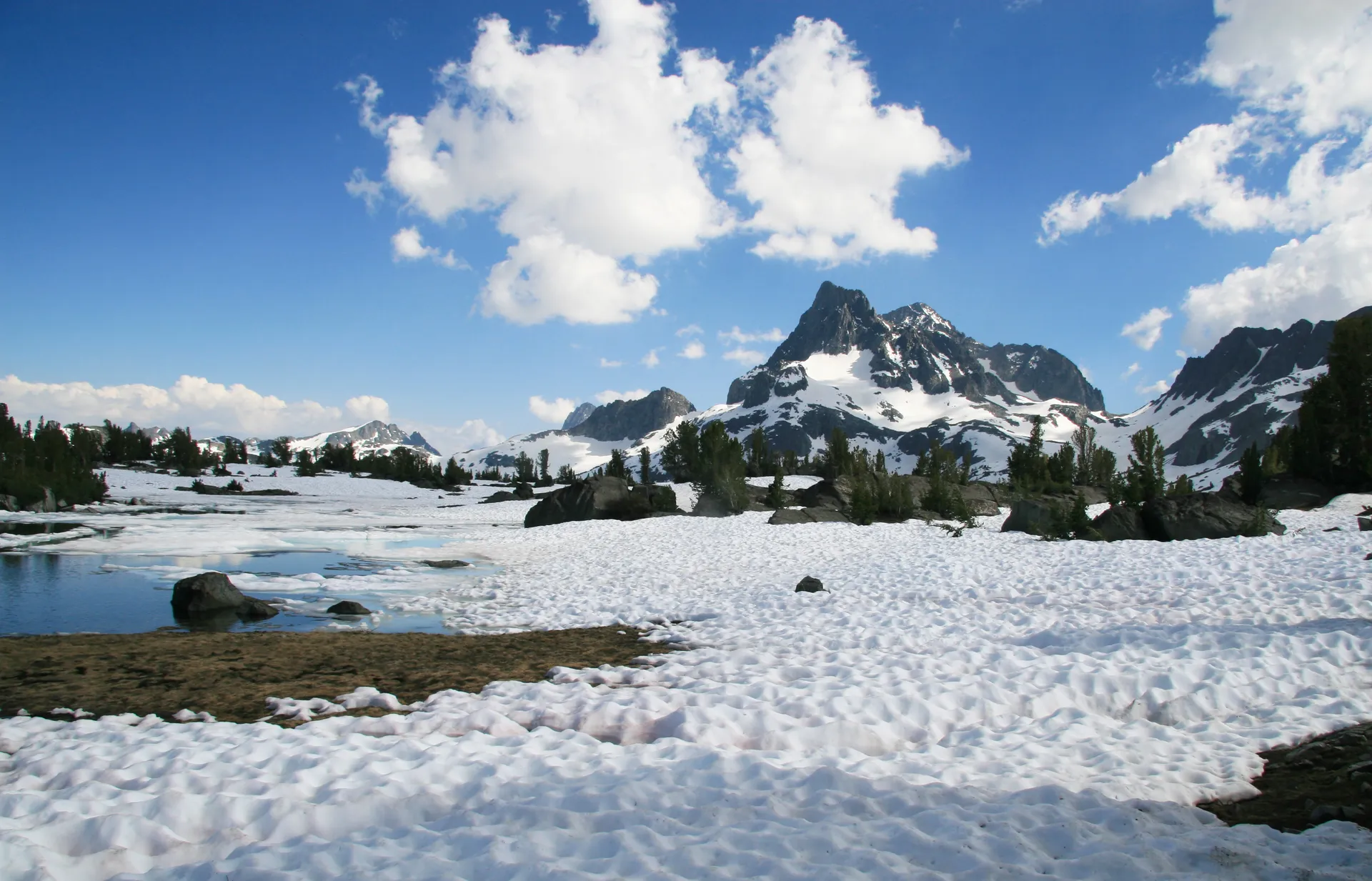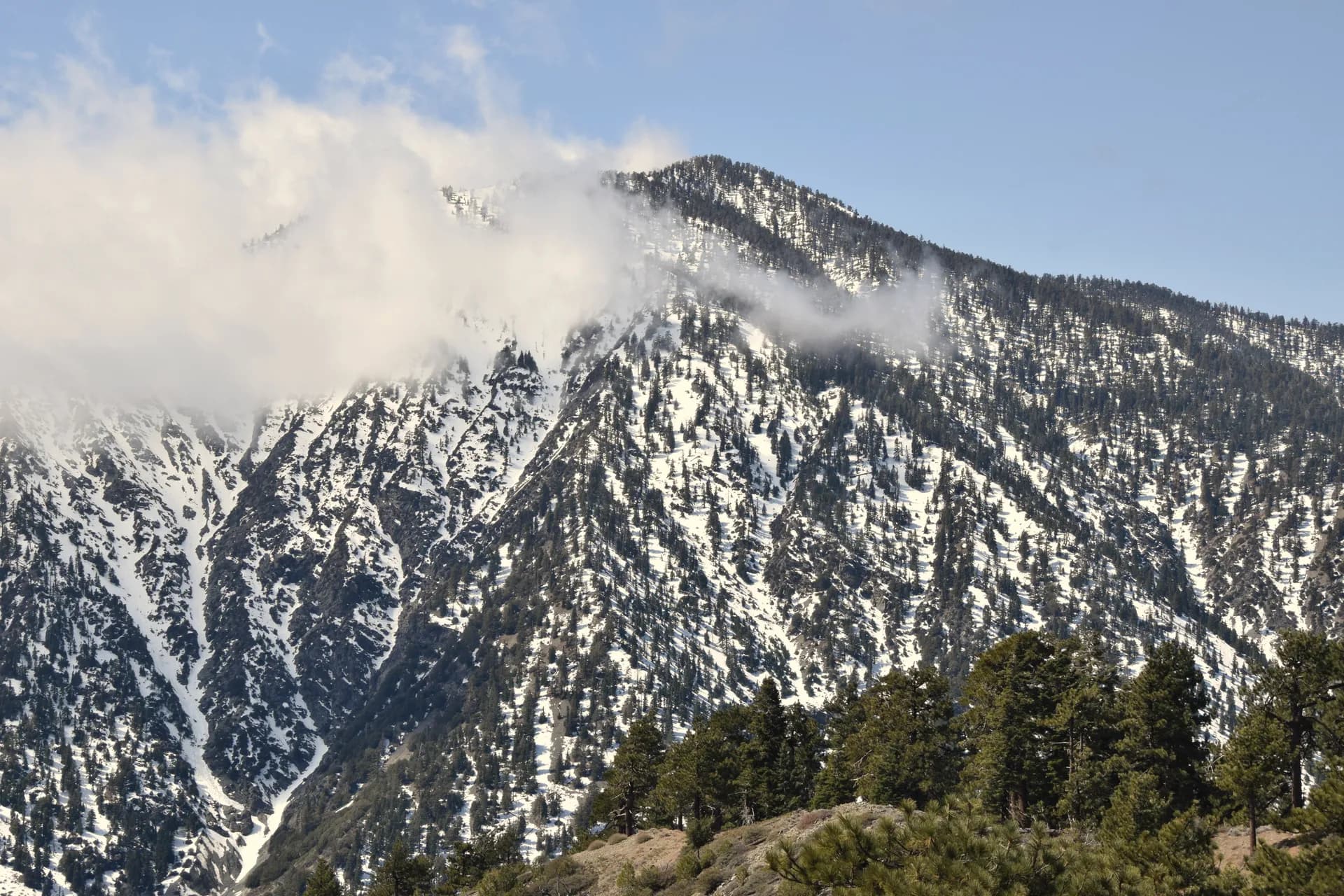
Angeles National Forest covers 700,386 acres of the San Gabriel and Sierra Pelona Mountains, forming a wall of rugged terrain along the northern edge of the Los Angeles basin. It's the national forest for 17 million people, and most of them can reach it in under an hour. From downtown LA, you can drive 45 minutes north on the 2 and be standing at a trailhead at 5,000 feet, looking down at the sprawl you just left behind.
The forest was established in 1892 as one of the first forest reserves in California, originally created to protect the watersheds that supply water to the growing city below. Today it serves as LA's pressure valve: a place where one of the most densely populated metro areas in the country goes to hike, camp, and breathe air that doesn't taste like the 405.
Why Angeles Stands Out
Most people don't associate Los Angeles with serious mountain terrain. That's a mistake. The San Gabriel Mountains are among the steepest and most tectonically active ranges in North America. Mount San Antonio (Mt. Baldy), the highest peak at 10,069 feet, rises nearly 10,000 feet above the valley floor in just 15 miles of horizontal distance. That kind of vertical relief is comparable to what you find in the Sierra Nevada or the Colorado Rockies.
The elevation range creates an extraordinary diversity of ecosystems within a compact area. At the lower elevations (1,500 to 3,000 feet), you're in coastal sage scrub and chaparral, the classic Southern California landscape of manzanita, ceanothus, and yucca. Climb higher and you enter oak woodland, then mixed conifer forest with Jeffrey pine, white fir, and incense cedar. Above 8,000 feet on Mt. Baldy, you reach subalpine terrain with lodgepole pine and limber pine, where winter storms dump serious snow and temperatures drop well below zero.
Fire is the dominant ecological force here. The Angeles burns regularly, and major fires have shaped the landscape in ways that are visible everywhere. The Station Fire of 2009 burned over 160,000 acres and destroyed 90 structures, closing large sections of the forest for years. Fire closures are a fact of life in this forest, and checking current conditions before any visit is not optional.
The geology is equally dramatic. The San Gabriel Mountains are being pushed upward along the San Andreas Fault system at a rate of about 2 inches per year, among the fastest uplift rates on the planet. That rapid uplift, combined with intense winter storms, creates steep, unstable slopes and deep, narrow canyons. The result is terrain that feels far more wild and rugged than you'd expect this close to a major city.
Best Trails in Angeles National Forest
With 557 miles of trails, from peak scrambles on San Gabriel Peak and Josephine Peak to waterfall hikes like Sturtevant Falls, the Angeles has something for every fitness level and time commitment. Here are four of the best.
Mt. Baldy via Devil's Backbone
The signature hike. This 11-mile out-and-back (starting from the ski lift at Mt. Baldy Notch) climbs 3,900 feet to the summit of the highest peak in the San Gabriel Mountains. The Devil's Backbone section is a narrow, exposed ridge with steep drop-offs on both sides and views that stretch from the Mojave Desert to the Pacific Ocean. On a clear winter day after storms have scrubbed the air, you can see Catalina Island. This is a serious mountain hike: exposed, physically demanding, and potentially dangerous in high winds or icy conditions. Free self-issue wilderness permits are required at the trailhead.
Bridge to Nowhere
A 10-mile out-and-back that follows the East Fork of the San Gabriel River through a narrow canyon to an intact concrete bridge that leads... nowhere. Built in the 1930s as part of a planned road to Wrightwood, the bridge was stranded when a massive flood in 1938 wiped out the road on both sides. Getting there requires multiple creek crossings (expect wet feet, and don't attempt this during high water), and the canyon walls close in dramatically as you approach the bridge. Bungee jumping operations run off the bridge on weekends for those who want an adrenaline chaser after the hike.
Eaton Canyon Falls
The most accessible waterfall hike in the LA area. This 3.4-mile out-and-back starts from the Eaton Canyon Nature Center in Pasadena and follows a mostly flat trail along the wash before climbing slightly to a 40-foot waterfall tucked into a narrow canyon. It's easy enough for families and close enough to the city that you can do it on a lunch break. The falls flow best from December through April after winter rains. Dogs are not allowed.
Trail Canyon Falls
A 4-mile out-and-back above the community of Tujunga that leads to a 30-foot waterfall in a surprisingly lush canyon. The trail crosses the creek several times, passes through oak and alder woodland, and arrives at a falls that feels like it belongs in the Pacific Northwest rather than Los Angeles. The hike is best after winter rains when the falls are running strong. An Adventure Pass is required for parking at the trailhead.
Permits and Passes
Angeles National Forest has a straightforward permit system compared to many western forests.
Adventure Pass: Required at most developed trailheads, picnic areas, and parking lots throughout the forest. Costs $5 per day or $30 per year. The America the Beautiful Interagency Pass ($80/year) also works. You can buy Adventure Passes at local outdoor shops, some gas stations near the forest, and ranger stations. Not all trailheads require one, but most do, and the fine for not having one is steep ($100+). When in doubt, display a pass.
Wilderness Permits: Free self-issue permits are required for entry into the San Gabriel Wilderness, Sheep Mountain Wilderness, and Pleasant View Ridge Wilderness. You'll find the permit boxes at trailheads. These are not limited-entry permits. Just fill one out and drop it in the box. The information helps the Forest Service track visitor use.
Campfire Permits: Required for any open flame (including camp stoves) outside of developed campgrounds. Free, available online through the California campfire permit system. The forest frequently bans all open fires during fire season (typically June through November, sometimes longer). Check the forest website or call the ranger station before planning any campfire.
Camping
Camping options in the Angeles range from developed campgrounds with amenities to rugged dispersed sites deep in the backcountry.
Buckhorn Campground sits at 6,300 feet on the Angeles Crest Highway, surrounded by tall pines and big-cone Douglas fir. The 38 sites have tables, fire rings, and vault toilets. At $12 per night, it's a solid deal for a mountain campground that actually feels like the mountains. Open May through November, reservable through Recreation.gov. The elevation keeps things cool even in summer.
Chilao Campground is the largest in the forest with 83 sites at 5,300 feet along the Angeles Crest Highway. It has flush toilets, running water, and an amphitheater with ranger-led programs in summer. Sites are $12 per night, reservable through Recreation.gov. It's a good base camp for hiking the Silver Moccasin Trail or exploring the Chilao Visitor Center area.
Monte Cristo Campground is a smaller, more rustic option (22 sites) in the East Fork area at 2,500 feet. Sites are first-come-first-served at $5 per night. It's a good staging point for the Bridge to Nowhere hike. No water is available, so bring your own.
Crystal Lake Campground is the only natural lake recreation area in the Angeles, perched at 5,800 feet on a side road off the Angeles Crest Highway. The 30 sites (first-come-first-served, $12/night) sit in a pine forest near the small seasonal lake. The Crystal Lake Visitor Center and a short nature trail make it a good choice for families.
For dispersed camping, the backcountry is open with a wilderness permit. Popular areas include the upper East Fork, the area around Mt. Baden-Powell, and the remote sections of the San Gabriel Wilderness. Practice Leave No Trace principles and pack out all waste. Water sources are unreliable in this forest, especially after October.
When to Visit
This is where Angeles flips the script on most national forests. While hikers in the Pacific Northwest and Rockies wait for snow to melt from June through October, the Angeles hiking season peaks in the cooler months.
October through May is the prime window for most trails. Winter storms bring rain to lower elevations and snow above 5,000 feet, keeping the waterfalls flowing and the air clear. Temperatures at popular trailheads (3,000 to 6,000 feet) range from the 40s to the 70s, which is perfect hiking weather. The mountains are green, the creeks are running, and the smog that blankets the basin in summer lifts after the first big rain.
December through March is the best time for waterfall hikes like Eaton Canyon and Trail Canyon Falls. It's also when Mt. Baldy gets enough snow to make the ski lifts run and when the Devil's Backbone ridge can become genuinely dangerous with ice and high winds. Check conditions carefully before attempting high-elevation trails in winter.
June through September brings crushing heat to lower elevations. Trails below 4,000 feet regularly see temperatures above 100 degrees Fahrenheit. Heat-related rescues are common, and several hikers have died from heat exposure on Angeles trails over the years. If you must hike in summer, stick to early mornings, high elevations (above 6,000 feet), or well-shaded canyon trails. Carry far more water than you think you need. The general rule for summer hiking here: 1 liter per hour of hiking, minimum.
Fire season overlaps with summer and fall. Large sections of the forest close during periods of extreme fire danger or active fires. The Red Flag Warning days (hot, dry, windy conditions) are when the forest is most vulnerable. Always check the Angeles National Forest website or their social media accounts for current fire closures before heading out.
Getting There
From central Los Angeles, the forest is reachable from multiple directions depending on your destination.
Angeles Crest Highway (Highway 2) is the main scenic corridor. It starts in La Canada Flintridge (just north of Pasadena) and winds 66 miles through the heart of the forest to Wrightwood. This road accesses most major campgrounds, trailheads, and viewpoints. The upper sections close during winter storms and sometimes for extended periods after rockslides or fire damage.
From downtown LA: Take the 210 Freeway to the Highway 2 exit in La Canada Flintridge. The forest boundary is about 5 miles up the highway, roughly 45 minutes from downtown depending on traffic. The 405 traffic applies here: leave early or leave late, because midday freeway time in LA is unpredictable.
To the Mt. Baldy area: Take the 10 or 210 Freeway east to the Mountain Avenue exit in Upland, then follow Mountain Avenue (which becomes Mt. Baldy Road) north for about 12 miles. The village of Mt. Baldy is roughly an hour from downtown LA.
To the East Fork (Bridge to Nowhere): Take the 210 Freeway to Azusa Avenue, head north through Azusa to the San Gabriel Canyon entrance. The East Fork staging area is about 15 miles up the canyon road.
To Eaton Canyon: From the 210 Freeway in Pasadena, exit at Altadena Drive and head north about 1.5 miles to the Eaton Canyon Nature Center. The trailhead is just 20 minutes from Old Town Pasadena.
Practical Tips
Water is the single most important thing to get right. The Angeles is drier and hotter than it looks, especially at lower elevations. Natural water sources are few and unreliable outside of winter. Carry at least 2 liters for any hike under 5 miles, and 3 to 4 liters for longer outings. In summer below 5,000 feet, increase that to 1 liter per hour. People underestimate the heat here every year, and search and rescue teams stay busy as a result.
Check for closures before every trip. Fire closures, road closures (the Angeles Crest Highway is notorious for rockslides), and trail closures due to storm damage are all common. The Angeles National Forest website and their Twitter/X account are the most reliable sources for current conditions. Showing up to a closed trailhead wastes your day and can earn you a fine if you go around the gates.
Start early. This applies year-round. In summer, early starts keep you ahead of the heat. In winter, short days mean limited daylight, and afternoon clouds can move in quickly. And on any day, the popular trailheads fill early. Eaton Canyon on a Saturday morning will be shoulder-to-shoulder by 10 AM.
Watch for rattlesnakes. Southern Pacific rattlesnakes are common throughout the lower elevations of the forest, especially from April through October. They're typically found on rocky trails, along creek banks, and near brush. Watch where you step and where you put your hands. Most bites happen when people try to handle or provoke the snake. Give them space, and they'll give you space.
The Angeles Crest Highway is a driving experience in itself. The 66-mile route from La Canada Flintridge to Wrightwood has over 1,000 curves and climbs from 1,300 feet to over 7,000 feet. It's popular with motorcyclists and sports car drivers, which means speed is a real hazard. Drive carefully, use pullouts for slow vehicles, and watch for cyclists on the lower sections.
Poison oak grows everywhere below 5,000 feet. Learn to recognize the three-leaf clusters and stay on trail. In winter, the plant drops its leaves and the bare stems are harder to spot. If you've been off trail, wash exposed skin with cold water and soap as soon as possible.
Angeles National Forest is one of the most underrated public lands in the western United States. It suffers from proximity to a city that gets more attention than its mountains do. But for anyone who lives in Southern California, or anyone visiting who wants to see a different side of LA, the Angeles offers steep peaks, quiet canyons, waterfalls, and genuine wilderness, all within an hour of Hollywood Boulevard. The catch is that you have to respect the terrain. This forest is steep, dry, fire-prone, and unforgiving of poor preparation. Come with enough water, check the closures, start early, and you'll find a mountain experience that rivals anything in the state.