Inyo National Forest stretches for 165 miles along California's Eastern Sierra, from the volcanic craters south of Mono Lake down to the desert peaks above Owens Valley. At 1.8 million acres, it contains the highest point in the contiguous United States (Mount Whitney, 14,505 feet) and some of the oldest living things on Earth (bristlecone pines, over 4,000 years old). It also happens to sit along one of the greatest driving corridors in American road-tripping: US-395.
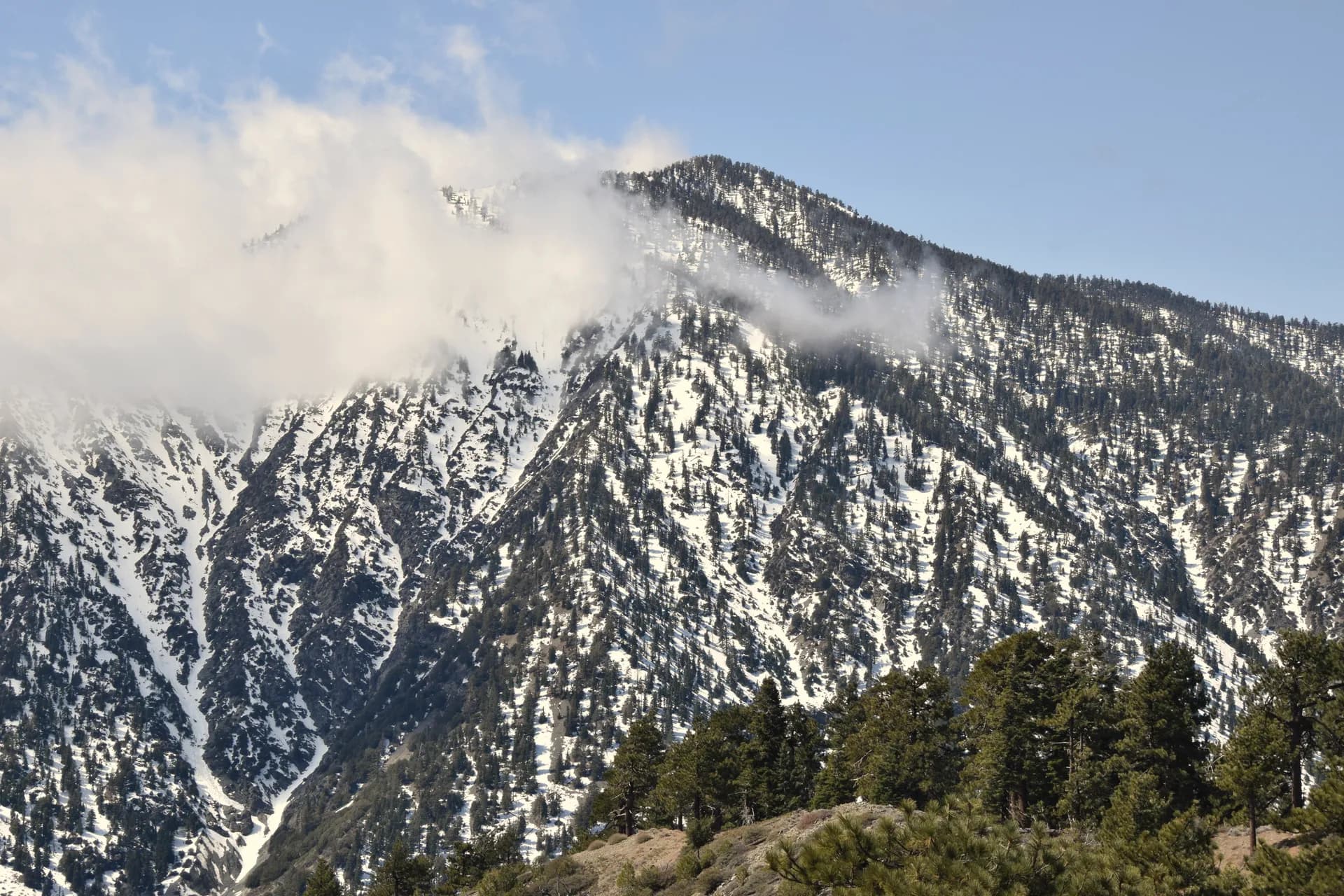
This is a forest of extremes. The western boundary follows the Sierra crest, where granite peaks top 13,000 and 14,000 feet. The eastern side drops abruptly into the high desert of the Owens Valley, barely 4,000 feet above sea level. That vertical relief creates a landscape unlike anything else in the National Forest System. You can drive from sagebrush flats to alpine tundra in under an hour.
Established in 1907, Inyo encompasses parts of the John Muir Wilderness, the Ansel Adams Wilderness, the Golden Trout Wilderness, and the Boundary Peak Wilderness. It borders three national parks (Yosemite, Sequoia, and Kings Canyon) and shares terrain with the Sierra Nevada's most dramatic mountain architecture.
Why Inyo Stands Out
Three things set Inyo apart from every other national forest in the country.
Mount Whitney. The highest peak in the Lower 48 at 14,505 feet. Whitney draws thousands of applicants every year for its lottery permit system. The standard route from Whitney Portal is a 22-mile day hike (or overnight) gaining 6,100 feet. It's not technical, but it's brutally long and high. Whitney anchors the southern end of the John Muir Trail, which runs 211 miles north to Yosemite Valley.
Ancient Bristlecone Pine Forest. In the White Mountains east of Bishop, a grove of Great Basin bristlecone pines includes individual trees over 4,000 years old. The oldest known living tree, Methuselah, is somewhere in this grove (its exact location is kept secret for protection). These trees were already ancient when the Roman Empire fell. The Schulman Grove visitor area sits at 10,000 feet and offers the Methuselah Trail, a 4.5-mile loop through the ancient forest. It's a profoundly quiet, otherworldly place.
The Eastern Sierra escarpment along US-395. The drive along US-395 from Lone Pine to Lee Vining is one of the most scenic in North America. The Sierra crest rises abruptly to the west, a wall of granite and snow that reaches 10,000 to 14,000 feet above the valley floor. Towns like Bishop, Mammoth Lakes, and Lone Pine serve as gateways to dozens of trailheads, hot springs, and climbing areas. Many visitors come to Inyo specifically for this corridor: the combination of mountain scenery, access to wilderness, and small-town services is hard to beat.
Best Trails in Inyo National Forest
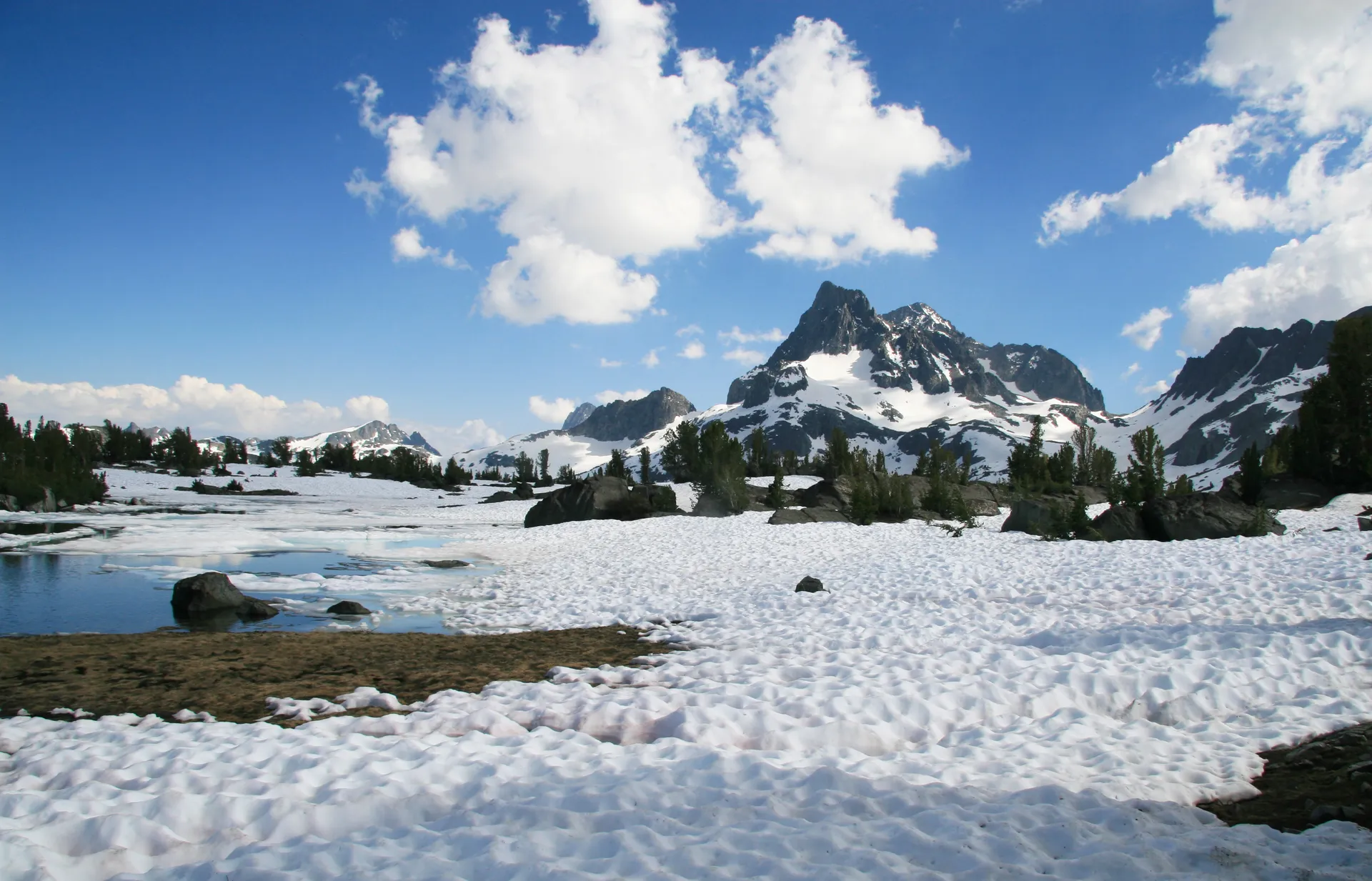
With over 1,200 miles of trails spanning desert canyons to alpine passes like Hilton Lakes in the Rock Creek drainage, Inyo offers something for every ability level. Here are four of the best.
Mount Whitney Trail
The big one. A 22-mile out-and-back from Whitney Portal (8,360 feet) to the summit (14,505 feet), gaining 6,100 feet of elevation. Most hikers attempt it as a very long day hike (12 to 18 hours) or split it into an overnight trip with a camp at Trail Camp (12,000 feet). The route passes through pine forest, crosses alpine meadows, and finishes with 97 switchbacks up the exposed west face. A lottery permit is required, and competition is fierce. This trail is covered in detail in our Mount Whitney Trail guide.
Convict Lake Loop
At the opposite end of the difficulty spectrum, this 2.8-mile loop circles Convict Lake at 7,850 feet. The lake sits in a glacial cirque with Laurel Mountain (11,812 feet) and Mount Morrison (12,268 feet) towering above. The trail is mostly flat, well-maintained, and suitable for families with young children. Fall is spectacular here: aspens turn gold in late September and early October, framing the lake against dark granite walls. Dogs are welcome on leash. No permit needed.
Duck Pass Trail
A 9.6-mile out-and-back from Coldwater Campground near Mammoth Lakes to Duck Pass at 10,797 feet, gaining about 2,500 feet. The trail passes Arrowhead Lake and Skelton Lake before climbing to Barney Lake, a gorgeous alpine pool at the base of the final headwall. The push from Barney Lake to the pass is steep but short, and the view from the top (down into the Purple Lake basin and the John Muir Wilderness) is outstanding. A wilderness permit is required ($5 per person).
Bishop Pass Trail
Starting from South Lake at 9,755 feet, this 12-mile out-and-back climbs 2,600 feet through a chain of alpine lakes to Bishop Pass at 11,972 feet. Long Lake, Saddlerock Lake, and Bishop Lake line the route, each one more dramatic than the last. From the pass, you look down into Dusy Basin on the Kings Canyon side, one of the most photographed alpine landscapes in the Sierra. A wilderness permit is required ($5 per person). The trail is also a popular entry point for backpackers heading into the backcountry of Kings Canyon National Park.
Permits and Passes
Inyo's permit system is straightforward but varies by activity and location.
Mount Whitney Day Hike Permit: Required for all Whitney summit attempts via the Whitney Trail from May 1 through November 1. The permit is distributed through a lottery on Recreation.gov. The application window typically opens in February for the upcoming season. Permits cost $15 per person. Demand far exceeds supply: in recent years, roughly 20,000 applications compete for about 5,500 day-hike permits. Your odds improve for midweek dates and shoulder-season entries (late May, October). A small number of walk-in permits are available at the Eastern Sierra Interagency Visitor Center in Lone Pine, released on a first-come-first-served basis the day before.
Wilderness Permit: Required year-round for overnight trips and for day hikes in certain quota areas. Permits cost $5 per person and are available through Recreation.gov. Popular trailheads (Whitney, Kearsarge Pass, Bishop Pass, North Lake) have quotas that limit daily entry. Reservations open six months in advance on a rolling basis. Unclaimed and unreserved permits are available as walk-ins at ranger stations in Lone Pine, Bishop, and Mammoth Lakes.
Recreation Fee (Day Use): Many developed trailheads and picnic areas require an Inyo National Forest day-use fee ($5) or an America the Beautiful Interagency Pass ($80/year). The pass is good at all national forests and parks.
Campfire Restrictions: Campfires are prohibited above 10,000 feet in most of Inyo's wilderness areas. Lower-elevation fire restrictions vary by season and conditions. Always check current fire orders before your trip at the Inyo National Forest website or at a ranger station.
Camping
Inyo has dozens of developed campgrounds and virtually unlimited dispersed camping at lower elevations.
Whitney Portal Campground is the staging area for Whitney summit attempts. It sits at 8,000 feet with 44 sites, potable water, flush toilets, and bear boxes. Sites are $28 per night and reservable through Recreation.gov. The campground fills every night during peak Whitney season (July and August). If you have a Whitney permit for early morning, staying here the night before makes the logistics much simpler.
Convict Lake Campground is one of the more scenic developed campgrounds in the forest. At 7,583 feet with 85 sites, it sits right on the lake's outlet creek with views of the surrounding peaks. Sites are $24 per night and reservable. The campground has potable water, flush toilets, and a campfire ring at each site. The Convict Lake Resort nearby has a store and restaurant.
Bishop Park Campground is located in Bishop Creek Canyon at 7,500 feet, on the road to South Lake and the Bishop Pass Trailhead. It has 20 sites at $28 per night, with potable water and vault toilets. It's a good base for Bishop Pass, Tyee Lakes, and other Bishop Creek trails.
Coldwater Campground sits at 8,900 feet near Lake Mary in the Mammoth Lakes Basin. With 77 sites at $26 per night, it's one of the larger campgrounds in the area and provides direct access to the Duck Pass Trailhead. Potable water, flush toilets, and bear boxes are available. The campground is reservable and fills quickly for summer weekends.
For dispersed camping, the Buttermilk Road area west of Bishop and the Alabama Hills near Lone Pine are popular free camping spots. Both offer dramatic scenery (the Buttermilks are a world-class bouldering destination; the Alabama Hills feature surreal rock formations with Whitney views). Standard Leave No Trace rules apply: camp on durable surfaces, pack out all waste, and use established fire rings where available.
When to Visit
June through October is the primary season, but timing depends heavily on what you want to do and at what elevation.
June: Lower-elevation trails (Convict Lake, the Alabama Hills, the Bristlecone Pine Forest) are accessible and comfortable. High passes and the Whitney zone are often still snow-covered. Road access to some trailheads (South Lake, Mosquito Flat for Mono Pass) may not open until mid-June or later.
July and August: Peak season. Virtually everything is snow-free and accessible. Daytime temperatures in the Owens Valley (Bishop, Lone Pine) reach the mid-90s, but trails above 9,000 feet are pleasant (60s to 70s during the day, 30s to 40s at night). Expect crowds at popular trailheads and full campgrounds. Afternoon thunderstorms are common above treeline from mid-July through August. Start early to be off ridgelines and passes by early afternoon.
September: The sweet spot. Crowds thin dramatically after Labor Day. Weather is typically dry and stable, with warm days and cool nights. Aspen groves along Bishop Creek, Convict Lake, and Lundy Canyon turn gold, making this prime photography season. Most facilities remain open through September.
October: Shoulder season. Many campgrounds close after the first or second weekend. Snow can arrive at any time above 10,000 feet. But the fall color can be extraordinary, and the solitude is real. Check road and campground status before planning an October trip.
Winter: US-395 stays open year-round, and Mammoth Mountain is a major ski destination (typically open November through June). The town of Mammoth Lakes is lively all winter. Backcountry skiing in the Eastern Sierra is world-class for experienced skiers with avalanche training. Lower-elevation areas (the Alabama Hills, the Bristlecone Pine Forest access road) are accessible in winter but cold.
Getting There
From Los Angeles: Take US-395 north. It's about 215 miles (3.5 hours) to Lone Pine, 260 miles (4.5 hours) to Bishop, and 310 miles (5 hours) to Mammoth Lakes. The drive up US-395 from the Mojave is straightforward and increasingly scenic as you approach the Sierra. This is the most common approach for Southern California visitors.
From Reno/Tahoe: Take US-395 south. Mammoth Lakes is about 165 miles (3 hours) from Reno. Bishop is another 40 miles south (45 minutes). This is a beautiful drive along the east side of the Sierra, passing Mono Lake and the June Lake Loop.
From the San Francisco Bay Area: The fastest route in summer is over Tioga Pass (Highway 120 through Yosemite), which drops you into Lee Vining at the northern end of the forest. Tioga Pass is typically open late May through November, depending on snow. When Tioga Pass is closed, the alternative is US-50 to US-395 through Carson City, adding significant time.
By air: Mammoth Yosemite Airport (MMH) has seasonal commercial flights from Los Angeles, San Francisco, and other cities (typically winter and some summer service). Reno-Tahoe International (RNO) is the closest major airport for the northern section. For the southern section, Los Angeles airports are the best option.
Practical Tips
Altitude acclimatization is critical. This is the single most important piece of advice for visiting Inyo. If you're coming from sea level and heading to Whitney Portal (8,360 feet), Bishop Pass (11,972 feet), or the Whitney summit (14,505 feet), your body needs time to adjust. Altitude sickness can start at 8,000 feet and becomes increasingly likely above 10,000 feet. Symptoms include headache, nausea, dizziness, and fatigue. Severe cases can become life-threatening.
The standard advice: spend at least one night at elevation before attempting a big hike. If you're driving from LA to Whitney Portal, arrive a day early and camp at the portal or in Lone Pine (3,700 feet) to begin adjusting. For anything above 12,000 feet, two nights of acclimatization at 7,000 to 9,000 feet makes a meaningful difference. Drink extra water, avoid alcohol for the first day, and don't push through symptoms.
Bear safety is serious here. Inyo's black bears, especially around Mammoth Lakes, are highly habituated to human food. Bear canisters are required for all overnight trips in most wilderness areas of the forest. At developed campgrounds, use the bear boxes provided. Never leave food, coolers, or scented items (sunscreen, toothpaste) in your car. Bears in the Eastern Sierra regularly break into vehicles. This is not a theoretical risk.
Water management: Above treeline, water sources become less predictable. Snowmelt streams dry up as summer progresses. In late season (September, October), carry more water than you think you need on high-elevation hikes. Always treat or filter backcountry water.
Sun and weather: The Eastern Sierra gets intense UV radiation at elevation. Sunburn can happen in under 30 minutes above 10,000 feet, even on hazy days. Bring strong sunscreen, good sunglasses, and a hat. Afternoon thunderstorms are common in summer. Watch for building cumulus clouds after noon and get below treeline if lightning threatens.
Cell service: You'll have coverage in Bishop, Lone Pine, and Mammoth Lakes (sometimes spotty). Once you leave the highway and head toward trailheads, expect no service. Download offline maps before you go. The Gaia GPS and CalTopo apps both offer excellent coverage of Sierra trails.
Gas and supplies: Fill up whenever you can along US-395. Bishop and Mammoth Lakes have full services (grocery stores, gear shops, gas stations, restaurants). Lone Pine has basic supplies and gas. Between towns, stations are sparse. Don't assume you'll find fuel at every small highway pullout.
Inyo National Forest is one of those rare public lands that delivers at every level. You can park at Convict Lake and take a casual stroll with the family, or you can train for months and attempt the highest peak in the Lower 48. The Eastern Sierra's combination of vertical relief, granite architecture, ancient forests, and open desert creates a landscape that doesn't exist anywhere else. Plan your permits early, respect the altitude, and bring more water than you think you need. The mountains here are generous, but they don't forgive carelessness.