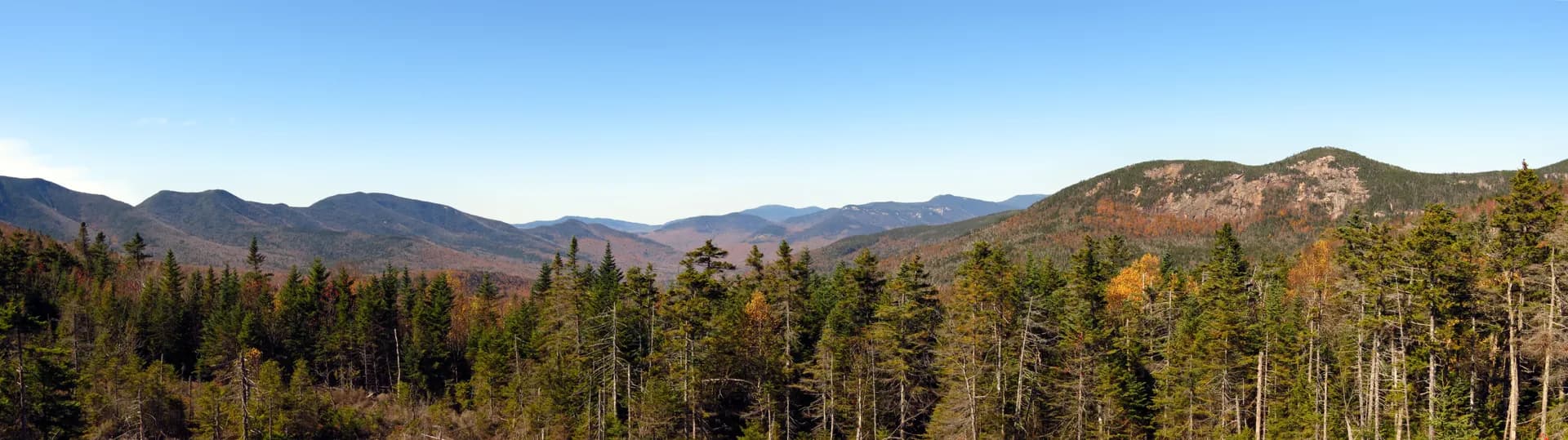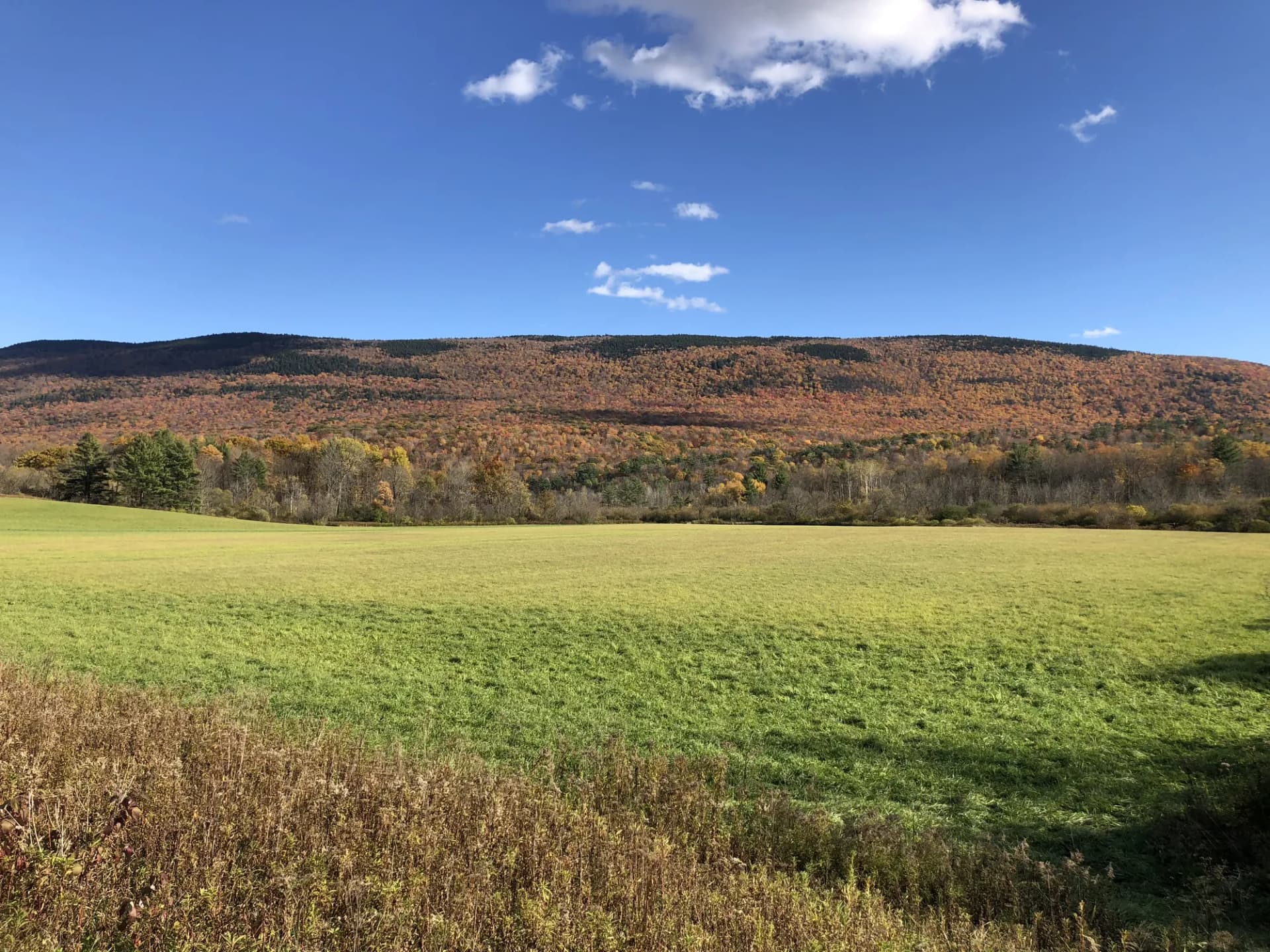
Green Mountain National Forest covers 400,000 acres across the spine of the Green Mountains in central and southern Vermont. The forest is split into two non-contiguous units, a northern unit centered on the Middlebury area and a southern unit stretching toward the Massachusetts border. Both units share the same defining characteristic: a rugged ridge-and-valley landscape blanketed in northern hardwoods that explode into color every autumn.
The forest owes much of its character to the Long Trail, a 272-mile footpath running from the Massachusetts border to the Canadian boundary at Jay Peak. Completed in 1930 by the Green Mountain Club, it is the oldest long-distance hiking trail in America and the inspiration for the Appalachian Trail. The Long Trail runs through the heart of the national forest, connecting summits, ridge traverses, and lean-to shelters that have seen hikers for nearly a century. In the southern unit, the AT and Long Trail share the same treadway for roughly 100 miles before the AT turns east toward New Hampshire. That overlap means this section of Vermont carries more long-distance hiker traffic than almost any stretch of forest in the Northeast.
The forest's 900 miles of trails extend well beyond the Long Trail corridor. Five designated wilderness areas, Breadloaf, Big Branch, Bristol Cliffs, George D. Aiken, and Peru Peak, add legal protection to some of the most remote terrain. The Moosalamoo National Recreation Area in the northern unit provides a concentrated network of day-hiking, mountain biking, and snowshoe trails with consistent signage and trailhead infrastructure. Taken together, the forest offers everything from a flat one-mile nature stroll at Texas Falls to the full 272-mile ridge walk to Canada.
Why Green Mountain Stands Out
The Long Trail corridor. Nowhere else in New England can you access the Long Trail and Appalachian Trail on the same footpath. The national forest provides the land base for that overlap, including the approach trails to some of the most storied summits in the Northeast: Stratton Mountain (where Benton MacKaye reportedly conceived the Appalachian Trail), Bromley Mountain, and the flanks of Mount Mansfield. The trail infrastructure here, maintained jointly by the Green Mountain Club and the USFS, is among the best-maintained in the region.
Fall foliage. Vermont's Green Mountains are widely considered one of the premier foliage destinations in North America. The combination of sugar maples, yellow birch, and American beech produces a palette of orange, crimson, and gold that typically peaks between September 25 and October 15. The ridgeline trails offer elevated vantage points for panoramic color views that are difficult to replicate anywhere south of the boreal zone. Expect full trailhead parking lots and crowded summits on peak October weekends.
Year-round access and winter recreation. Unlike many southern forest destinations, Green Mountain is genuinely a four-season forest. Cross-country ski areas operate on national forest land. Snowshoers follow summer trail networks through snowy hardwood stands. Winter hikers who come prepared find uncrowded summits and exceptional views once the leaves are down. Mud season (roughly April through mid-May) is the one period where some trails are best avoided to prevent tread damage, but even then, many lower-elevation routes stay hikeable.
Best Trails in Green Mountain National Forest
The Long Trail to Mount Mansfield Summit is the showpiece hike of the forest. The 8.4-mile out-and-back ascent delivers 2,500 feet of elevation gain and culminates at Vermont's highest point (4,393 feet). The ridge walk along the summit, called the Chin, offers panoramic views across the Champlain Valley to the Adirondacks on clear days. This is a strenuous day hike and requires full mountain hiking preparation, particularly in shoulder seasons when ice can linger on the upper ridges.
The Stratton Mountain Summit Trail covers 6.8 miles with 1,750 feet of gain and connects to both the Long Trail and the Appalachian Trail at the summit. The fire tower at the top is one of only a handful of operational summit towers in Vermont and provides a 360-degree view that includes much of the southern Green Mountains.
The Moosalamoo Loop provides a 9.0-mile circuit through the northern unit's signature recreation area. The loop passes Falls of Lana, a 100-foot waterfall, open ridgeline segments with Lake Dunmore views, and dense northern hardwood forest. The sustained but moderate terrain makes this a strong choice for intermediate hikers looking for a full-day outing.
The Bread Loaf Wilderness Trail is a quieter 7.0-mile out-and-back into one of the forest's five wilderness areas. The lack of maintained amenities and the remoteness of the Bread Loaf terrain mean this trail sees far less traffic than the Long Trail corridor. It rewards hikers who want solitude and birdsong over summit views.
Permits and Passes
Most trailheads in Green Mountain National Forest require no permit or fee as of 2026. Some backcountry shelters maintained by the Green Mountain Club along the Long Trail corridor collect a caretaker fee during peak summer season, typically $5-10 per person per night. These fees support shelter maintenance and trail stewardship. Verify current shelter fees and policies at green-mountain.org before overnight trips.
The America the Beautiful annual pass is accepted at recreation sites that charge day-use fees. See the Veterans Benefits guide for information on free passes available to veterans and active-duty military.
Camping
Developed campgrounds in the forest are concentrated in the southern unit. Hapgood Pond Recreation Area near Peru offers 28 sites with access to a swimming beach on the pond, making it a popular family base camp. Chittenden Brook Campground in the northern unit provides a quieter option with good proximity to Moosalamoo trails. Moosalamoo Campground is a smaller facility directly within the recreation area.
Backcountry camping is permitted throughout most of the forest with no permit required as of 2026, provided campers follow Leave No Trace principles and stay at least 200 feet from water sources and trails. Camp at designated sites or on durable surfaces when possible. For a detailed overview of Leave No Trace practices, see the LNT guide.
Long Trail shelters (lean-tos and lodges) are maintained by the Green Mountain Club. Permits are not required for most, but caretaker fees apply at some locations in summer.
When to Visit
Summer (June through August): The most reliable season for all trails. High-elevation routes are fully snow-free by late June. Wildflowers peak in May and June at lower elevations. Expect blackflies in June, particularly at dawn and dusk.
Fall (September through October): The premier season for views and color. Foliage typically peaks in the mountains around the first week of October, with lower valleys peaking later. Daytime temperatures are pleasant, but nights can drop into the 30s at elevation by mid-October.
Winter (December through March): Snowshoeing and ski touring are excellent in good snow years. Above-treeline trails and summits require crampons and ice axe skills during ice conditions. Check the conditions guide before any winter summit attempt.
Spring (April through mid-May): Mud season. Many trails are soft and easily damaged. Stick to hardened trails or gravel roads. The forest is beautiful and uncrowded, but tread carefully.
Getting There
Northern unit (Middlebury area): Take Route 7 to Middlebury, then Route 125 east into the forest. The Moosalamoo area is accessible via Forest Road 32 off Route 125 near Ripton.
Southern unit (Manchester/Peru area): Take Route 7 to Manchester, then Route 11/30 east toward Peru and Bromley. Route 100 provides access to several trailheads along the eastern edge.
The forest has no commercial shuttle service. Most trailheads are accessible by standard passenger vehicles in summer and fall. High-clearance vehicles are helpful on unpaved forest roads after rain or during mud season.
Practical Tips
- Trail signage in the forest is generally good, but conditions on less-traveled routes can be difficult to assess in advance. Check the USFS Green Mountain website and the Green Mountain Club trail report pages before your trip.
- Black bear activity is consistent throughout the forest. Store food in bear canisters or hang food bags at backcountry sites. Review bear canister requirements for what to bring on overnight trips.
- Cell service is unreliable across most of the forest, including near popular trailheads. Download offline maps before you leave.
- Hunting seasons in fall (primarily October through December) overlap with peak foliage hiking season. Wear blaze orange when hiking during deer season.
Planning Your Trip
The USFS Green Mountain and Finger Lakes National Forests website at fs.usda.gov/greenmountain has current ranger district contacts, campground reservation links, and road condition updates.
The Green Mountain Club (greenmountainclub.org) is the authoritative source for Long Trail conditions, shelter availability, and volunteer trail stewardship. Their guidebooks and maps are the standard reference for trails in this forest.
For trip planning tips on permits, gear, and timing, see the national forest camping permit guide and the conditions guide.