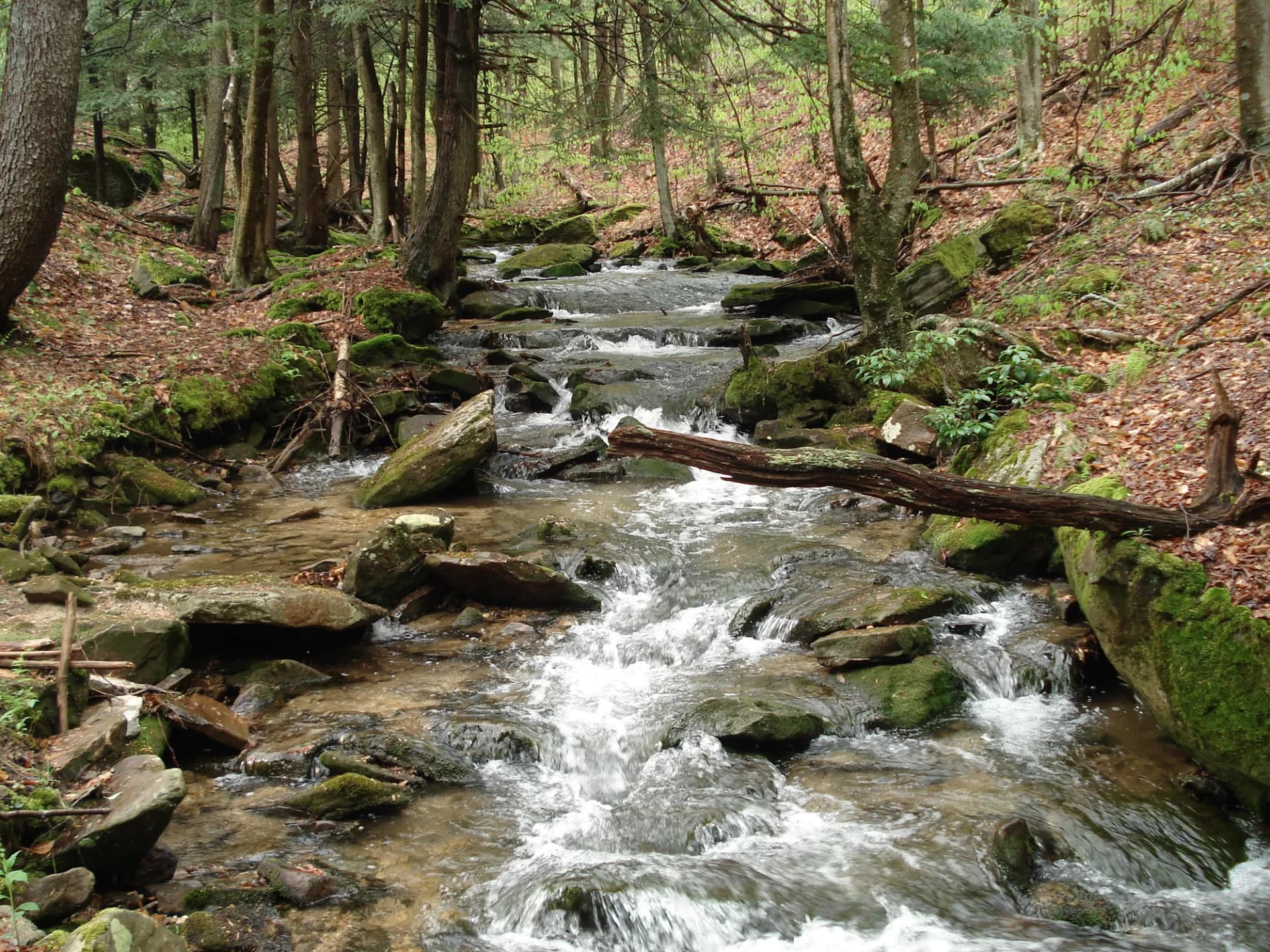
Monongahela National Forest is the most mountainous landscape in West Virginia and one of the most topographically dramatic national forests east of the Mississippi. The 919,000-acre forest covers a large section of the Allegheny Highlands, where ridge after ridge of folded Appalachian geology rises to elevations above 4,000 feet and the terrain would feel at home anywhere in the mountain West if not for the dominant red spruce and northern hardwood forest that marks these as eastern mountains.
The forest contains the state's highest point, Spruce Knob at 4,863 feet, and a landscape feature unlike anything else in the East: Dolly Sods, a high-elevation heath barren on the Allegheny Front that looks like something transplanted from northern Canada. Logging and fire in the early 1900s stripped the original red spruce forest from Dolly Sods, and what grew back in the exposed, acidic, windswept conditions was a mosaic of blueberry scrub, Labrador tea, sphagnum bogs, and azalea thickets. The USFS now protects this unique ecosystem as the Dolly Sods Wilderness.
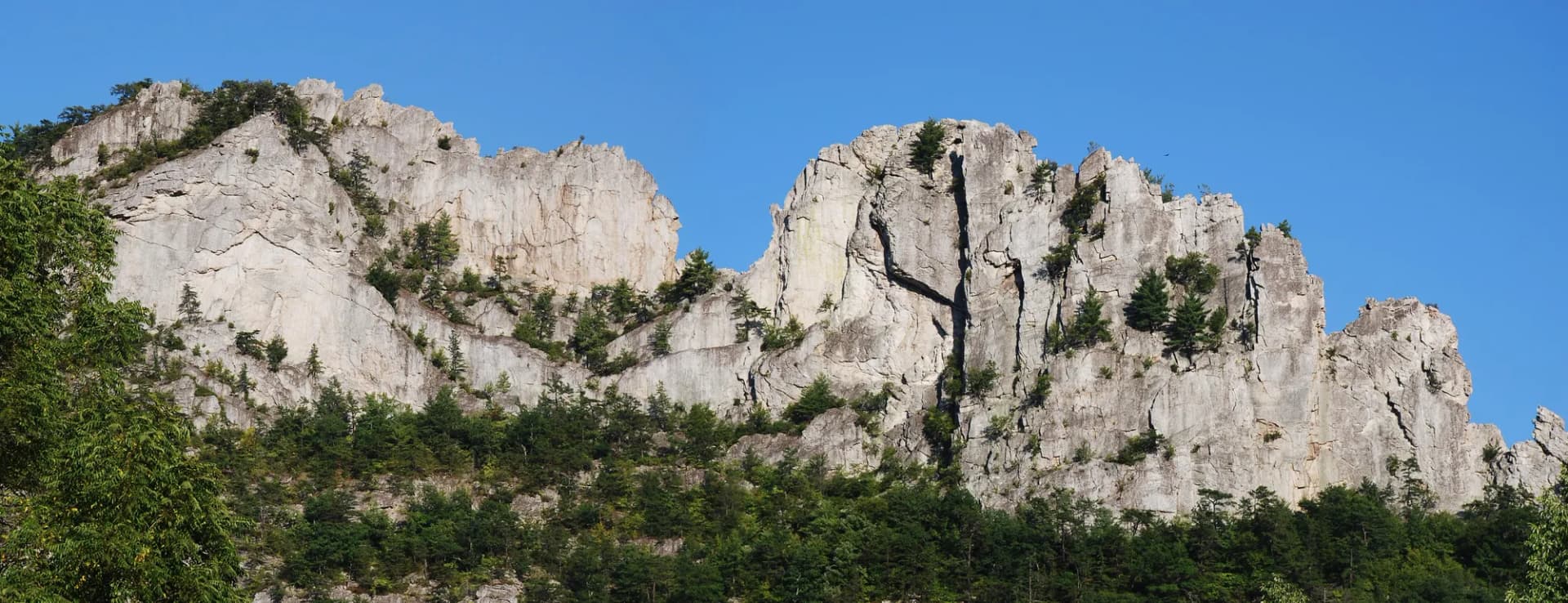
Seneca Rocks, on the western edge of the forest, is another singular feature: a 900-foot quartzite fin that rises like a ship's prow above the North Fork of the South Branch of the Potomac River. It is one of the premier traditional rock climbing destinations in the eastern United States and a landmark visible for miles across the Seneca Creek valley.
Five federally designated wilderness areas protect 78,000 acres within the forest, including Cranberry Wilderness at nearly 36,000 acres the largest designated wilderness in any eastern national forest.
Why Monongahela Stands Out
Dolly Sods: The East's Most Unusual Landscape
No other place in the eastern United States looks like Dolly Sods. The windswept heath barren on the Allegheny Front receives weather systems more typical of New England than West Virginia, with subzero winter temperatures, late spring frosts, and fog that can persist for days. The landscape is wide open, with views extending across multiple ridges on clear days. The Dolly Sods Wilderness Loop gives hikers a 7-mile introduction to this extraordinary terrain.
Seneca Rocks: Appalachian Technical Climbing
The 900-foot quartzite fin at Seneca Rocks has been drawing climbers since the 1930s, when it was used for military mountaineering training. The Forest Service visitor center at the base has a small museum explaining both the geological and climbing history. Non-climbers can access views of the rock from the Seneca Rocks Summit Trail, a 4-mile out-and-back that gains 1,000 feet to a viewpoint just below the summit fin.
Five Wilderness Areas and 830 Miles of Trail
The 830-mile trail system includes everything from the gentle Spruce Knob Observation Area Loop to the challenging multi-day routes through Otter Creek and Cranberry Wilderness. The Otter Creek Wilderness Loop covers 8 miles of rugged backcountry with 1,000 feet of elevation gain through a valley that has no roads and no development within its boundaries.
Best Trails in Monongahela National Forest
The trail system covers dramatically varied terrain. For day hikers, the Seneca Rocks Summit Trail is the most iconic the viewpoint near the summit is one of the most photographed spots in West Virginia. The Dolly Sods Wilderness Loop offers the most unique landscape in the forest. The Blackwater Canyon Rail Trail follows an abandoned railroad grade through a 1,000-foot-deep gorge for 8 miles out and back. The Highland Scenic Highway Trail runs along the Allegheny Front with high-elevation views.
For backpackers, the Rohrbaugh Plains Trail in the Dolly Sods area offers a more remote experience beyond the day hiker zone. The Smoke Hole Canyon Trail follows the South Branch Potomac through a limestone canyon with excellent fishing.
Permits and Passes
Most trail use and dispersed camping is free without a permit. The Seneca Rocks day-use area charges $3/vehicle (as of 2026). Developed campgrounds charge fees. The America the Beautiful pass covers fees at participating sites. Veterans and military members should see the veteran benefits guide for pass discounts.
Some recreation areas in the forest have fire restrictions during dry periods. Always check conditions before your visit.
Camping
Seneca Shadows Campground near Seneca Rocks has 81 sites and is the most developed campground in the forest, with electric hookups and flush restrooms. Spruce Knob Lake Campground has 42 sites at a high-elevation lake near the summit. Red Creek Campground in the Dolly Sods area has 12 primitive sites. Dispersed camping is permitted throughout most of the forest and is the primary option for backpackers in the wilderness areas.
When to Visit
May through October covers the main hiking season. June and September are the best months for conditions: June before humidity and thunderstorm season, September for cooler temperatures and the start of fall color. Dolly Sods and the high ridges see weather year-round, including snow at any month above 4,000 feet. The Allegheny Front gets higher rainfall and lower temperatures than surrounding areas be prepared for conditions to change quickly.
Fall color peaks at higher elevations in late September and descends through October. The combination of spruce, maple, and beech creates excellent color variety.
Getting There
Elkins, West Virginia, is the main gateway city, served by US-33 from the west and US-219 from the north. Seneca Rocks is on US-33, approximately 35 miles east of Elkins. Spruce Knob is accessed from County Road 29 off US-33, then a forest road to the summit. Dolly Sods requires forest roads from US-33 east of Petersburg.
From Washington DC, take I-66 west to US-50 west into West Virginia, then connect to US-33 west approximately 3.5 to 4 hours depending on traffic. From Pittsburgh, take the West Virginia Turnpike south or I-79 south to Elkins via county roads.
Practical Tips
Weather on the high ridges especially Spruce Knob, Dolly Sods, and the Allegheny Front can be extreme. Thunderstorms build rapidly in afternoon hours from June through August. Start high-elevation hikes early and descend before midday. Pack a rain layer and warm layer regardless of the morning forecast.
Bears are present throughout the forest. Follow proper food storage practices at camp. Rattlesnakes are present at lower elevations watch footing on rocky trails below 3,000 feet.
The forest roads in Monongahela are often rough and can be impassable in winter and early spring. Check road conditions before driving to remote trailheads.
Planning Your Trip
For a first visit, the Seneca Rocks area is the logical starting point: the visitor center is excellent, the campground at Seneca Shadows is comfortable, and the surrounding trails cover both easy and challenging options. For the Dolly Sods experience, allow a full day at minimum the drive to the trailheads is slow on forest roads. The national forests vs. national parks guide explains how Monongahela's access rules compare to the adjacent New River Gorge National Park, which opened as West Virginia's first national park in 2020.