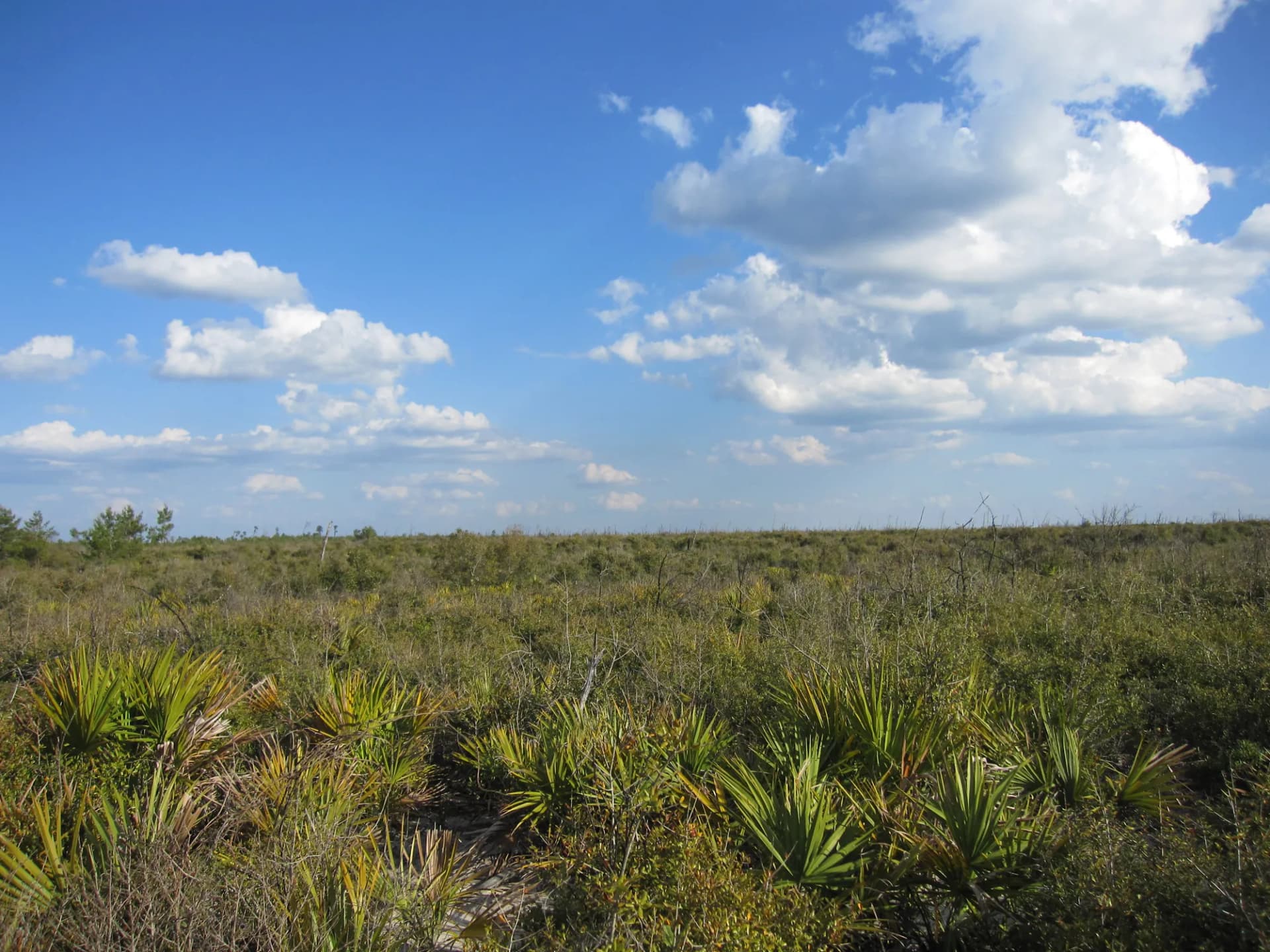
Ocala National Forest covers 383,000 acres of central Florida's scrub-lake-spring landscape, making it the southernmost national forest in the continental United States and the oldest national forest established east of the Mississippi River. The forest was designated in 1908 and protects a landscape that looks unlike anything in the Appalachian or Pacific Northwest national forests: flat terrain, white sand trails, open scrub dotted with longleaf pine, and springs that boil up from the Floridan Aquifer at a constant 68 degrees year-round.
The forests of the Ocala are not a backdrop for dramatic mountain scenery. They are a destination for a fundamentally different outdoor experience: clear-water canoe runs through tangled cypress, flat sandy trails through scrub populated with gopher tortoises and Florida scrub-jays, and spring swimming holes that maintain their perfect temperature while Florida summer temperatures exceed 95 degrees above the water line.
The Florida National Scenic Trail enters the forest from the south and runs 66 miles through the heart of the forest before continuing north toward the Panhandle. This is the most significant hiking route through Ocala and traverses the full range of the forest's habitat types: scrub, sandhills, flatwoods, and spring-fed streams. The Florida Trail Association maintains the route and provides current conditions updates.
Why Ocala Stands Out
The springs. Juniper Springs, Alexander Springs, Silver Glen Springs, and Salt Springs are each distinct experiences. Juniper Springs produces approximately 13 million gallons of clear, 68-degree water per day from a single spring head. The canoe run from Juniper Springs to the Ocala Forest boundary is a 7-mile paddle through subtropical vegetation that has been drawing visitors since the CCC-built recreation area was completed in the 1930s. Alexander Springs is slightly warmer and surrounded by cypress. All four springs support designated swimming areas and campgrounds.
Florida scrub ecology. The Big Scrub, the largest remaining contiguous area of Florida scrub on public land, occupies the central portion of the forest. This habitat is far older than the Appalachian forests and maintains species assemblages that survived multiple glacial cycles in isolation on sandy ridges above rising sea levels. The Florida scrub-jay, found only in this habitat type, is an animated and curious bird that often approaches hikers closely. Gopher tortoises dig burrows in the sandy soil that serve as habitat for dozens of other species. The scrub is biologically exceptional.
Year-round access with manageable weather (in winter). Most of the eastern US national forests are significantly limited in winter, but Ocala is fully accessible from October through April, the prime hiking season. Temperatures in the 60s and 70s, low humidity, and minimal insects make this one of the more comfortable hiking environments in the eastern US during what is otherwise off-season for hiking.
Best Trails in Ocala National Forest
The Florida National Scenic Trail Section through Ocala is the backbone of the forest's trail system. The 10.0-mile day-hiking section covered in this guide gives a comprehensive sample of the forest's habitats. The flatland terrain means this is accessible to most hikers regardless of fitness level.
The Juniper Springs Recreation Loop is a 7.0-mile loop that combines the Juniper Springs canoe run ecosystem with forest trail hiking. The 50-foot gain across the loop is virtually flat. This route is popular with families and visitors based at the Juniper Springs campground.
The Alexander Springs Loop Trail is a 12.0-mile loop accessible from the Alexander Springs Recreation Area. Longer than the Juniper loop, it penetrates deeper into the forest's flatwood and scrub habitats.
The Big Scrub Trail provides the most direct access to the ancient scrub ecosystem at the heart of the forest. The 8.0-mile loop through the Big Scrub area is the best single route for observing Florida scrub-jays and gopher tortoises.
Permits and Passes
Most trail hiking in Ocala requires no permit as of 2026. Developed spring recreation areas charge a day-use fee of approximately $5-8/vehicle as of 2026; verify current rates with the forest. America the Beautiful passes are accepted at spring recreation areas. See the Veterans Benefits guide for information on free passes for veterans.
Hunting is permitted in designated areas during Florida's hunting seasons (primarily fall and winter). Check the Florida Fish and Wildlife Commission's hunting season calendar before planning fall hiking trips in areas outside the developed recreation areas.
Camping
Ocala's spring-based campgrounds (Juniper Springs, Alexander Springs, Salt Springs) are among the most popular in Florida's national forest system. They fill well in advance for winter weekends and holiday periods. Reserve early through Recreation.gov.
Dispersed camping is permitted in designated areas of the forest with no permit required as of 2026. Check the USFS Ocala website for current dispersed camping boundaries, as some areas have restrictions.
See the national forest camping permit guide for general planning guidance.
When to Visit
October through April: The premier hiking season. Temperatures are manageable, insects are at their least active, and the springs are busy but not overwhelmingly crowded on weekdays.
December through February: The coolest months, with occasional cold fronts dropping temperatures into the 40s at night. Excellent for hiking and wildlife watching. Some manatees enter the spring runs during cold snaps, as the 68-degree spring water is warmer than the surrounding river.
May through September: Hot (90s), humid, and with afternoon thunderstorms almost daily from June through September. Biting insects peak in summer. The springs provide cooling relief but the hiking itself is uncomfortable in peak summer heat. Not the recommended season for extended trail hiking.
Fall hunting season (October through December): Hunting is permitted in portions of the forest. Wear orange or check restricted areas before hiking in areas outside the main recreation sites.
Getting There
From Ocala: Take FL-40 east from Ocala into the national forest. Juniper Springs is approximately 26 miles east of Ocala on FL-40. Alexander Springs is accessible via FL-19 from Umatilla.
From Orlando: Take FL-429 north to US-441 north, then FL-19 north to the forest. The drive from Orlando to Alexander Springs takes approximately 60-70 minutes.
From Gainesville: Take US-441 south to FL-19, then south to the forest. Approximately 50 minutes to the north forest boundary.
Practical Tips
- Bring insect repellent regardless of season. Mosquitoes and no-see-ums are present year-round, peaking in summer.
- Water in the scrub terrain can be scarce away from the springs. Carry sufficient water for your planned route; individual needs vary.
- Florida black bears are present throughout the forest. Store food properly, particularly at campgrounds.
- The white sandy trails can be disorienting; download offline maps before hiking in remote scrub areas.
- Alligators are present in all water bodies. Reference Florida Fish and Wildlife Commission guidelines for safety.
Planning Your Trip
The USFS Ocala National Forest website at fs.usda.gov/ocala has current conditions, campground reservations, and ranger district contacts.
For general background on how national forests work and what to expect, see the national forest vs. national park guide.