Pisgah National Forest
512,758 acresApril through November
Complete guide to Pisgah National Forest in western North Carolina. Trail recommendations, campgrounds, waterfalls, Blue Ridge Parkway access, and trip planning resources.
13 min read
The Tar Heel State
Blue Ridge waterfalls, the highest peaks east of the Mississippi, and the birthplace of American forestry.
The Blue Ridge Parkway runs 252 miles through North Carolina's mountains, connecting hundreds of trailheads and overlooks
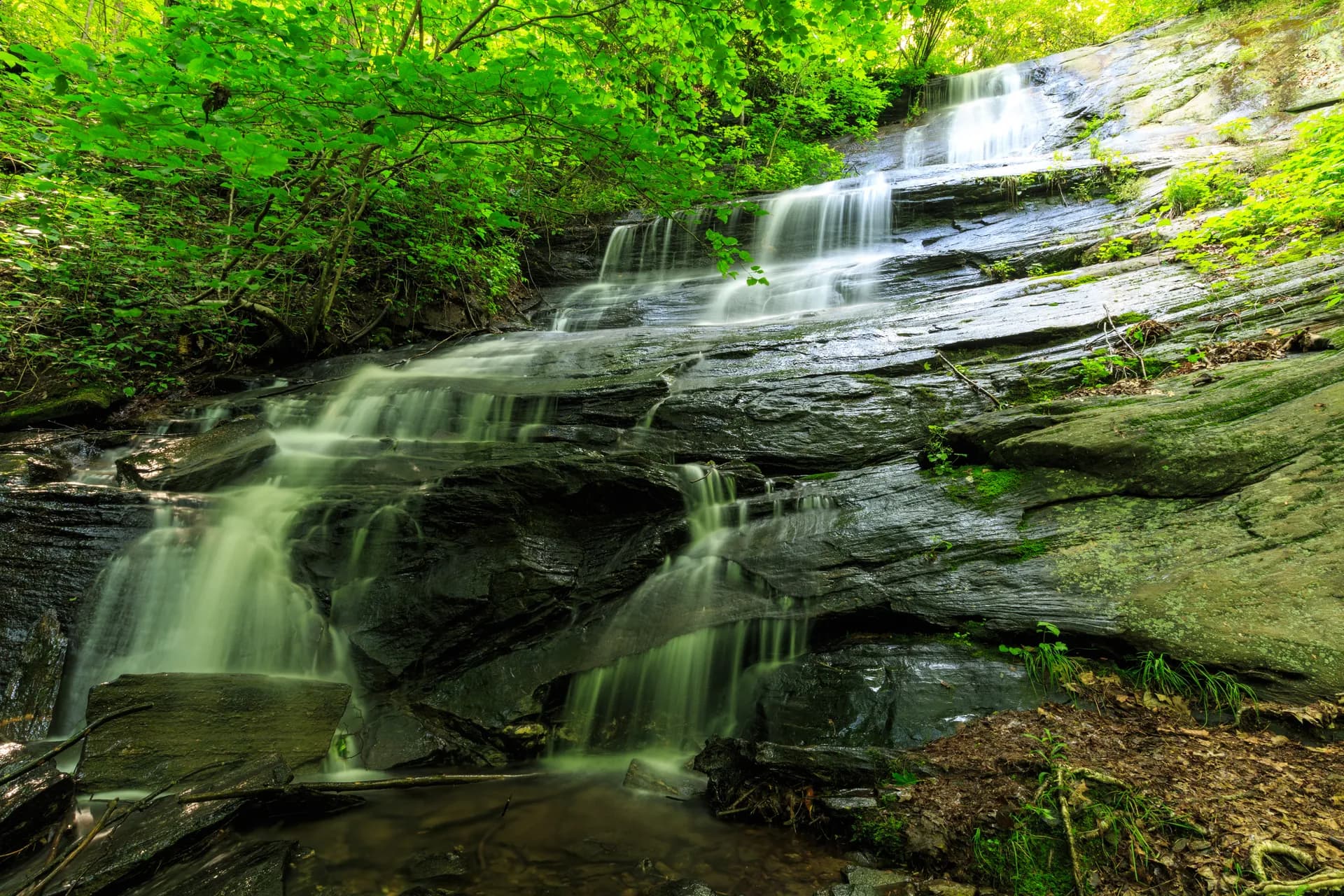
Western North Carolina has over 250 named waterfalls, earning Transylvania County the title of 'Land of Waterfalls'
The AT crosses 96 miles through North Carolina, including its highest point at Clingmans Dome (6,643 ft)
Mount Mitchell (6,684 ft) in Pisgah National Forest is the highest peak east of the Mississippi River
America's first forestry school was established in Pisgah Forest in 1898, where modern forest management began
The southern Appalachians in North Carolina have more tree species than all of northern Europe combined
Year-round hiking is possible at lower elevations. Spring (April through May) brings wildflowers and waterfall season. October delivers peak fall color along the Blue Ridge Parkway. Winter above 5,000 ft can bring ice and snow.
Pisgah National Forest is where Gifford Pinchot first practiced scientific forestry in America, on land owned by George Vanderbilt's Biltmore Estate.
The Appalachian Trail's highest shelter, the Mount Collins Shelter at 5,870 ft, sits in the North Carolina mountains.
Nantahala National Forest's name comes from the Cherokee word meaning 'Land of the Noonday Sun' because the gorges are so deep sunlight only reaches the floor at midday.
Looking Glass Rock in Pisgah National Forest gets its name from ice that forms on the granite face in winter, reflecting sunlight like a mirror.
Linville Gorge in Pisgah National Forest is often called the 'Grand Canyon of the East,' dropping 2,000 ft over 12 miles.