Mt. Baker-Snoqualmie National Forest runs for roughly 140 miles along the western slope of the Cascade Range in Washington State, stretching from the Canadian border in the north to near Snoqualmie Pass in the south. The forest is defined by contrast: active volcanoes dusted with permanent glaciers, ancient temperate rainforests fed by Pacific moisture, and high subalpine meadows that explode with wildflowers each July. At 1.7 million acres, it is one of the most visited national forests in the country, partly because its northern reaches sit within two hours of Seattle.
Mt. Baker itself is the anchor of the northern forest. The volcano rises to 10,781 feet and holds more glacial ice than any other peak in the lower 48 outside of the Cascades' two other major stratovolcanoes. It last erupted in 1880 and still emits fumarolic steam from Sherman Crater near its summit. Hiking here means traveling across volcanic rock, past sulfur vents, and through a landscape that is geologically young. The mountain has also hosted some of the most unusual weather records in North America, including a world snowfall record of 1,140 inches in the 1998-1999 season at Mt. Baker Ski Area.
The southern portion of the forest, closer to Snoqualmie Pass and North Bend, gets heavier recreational use because of its proximity to Seattle's eastern suburbs. Trails like Mount Si draw thousands of hikers per weekend in summer. The forest connects to North Cascades National Park along much of its eastern border, creating a vast protected corridor that supports large mammal populations including wolves, which have recolonized portions of the northern Cascades over the past decade.
Why Mt. Baker-Snoqualmie Stands Out
Glacier Access Without Technical Gear
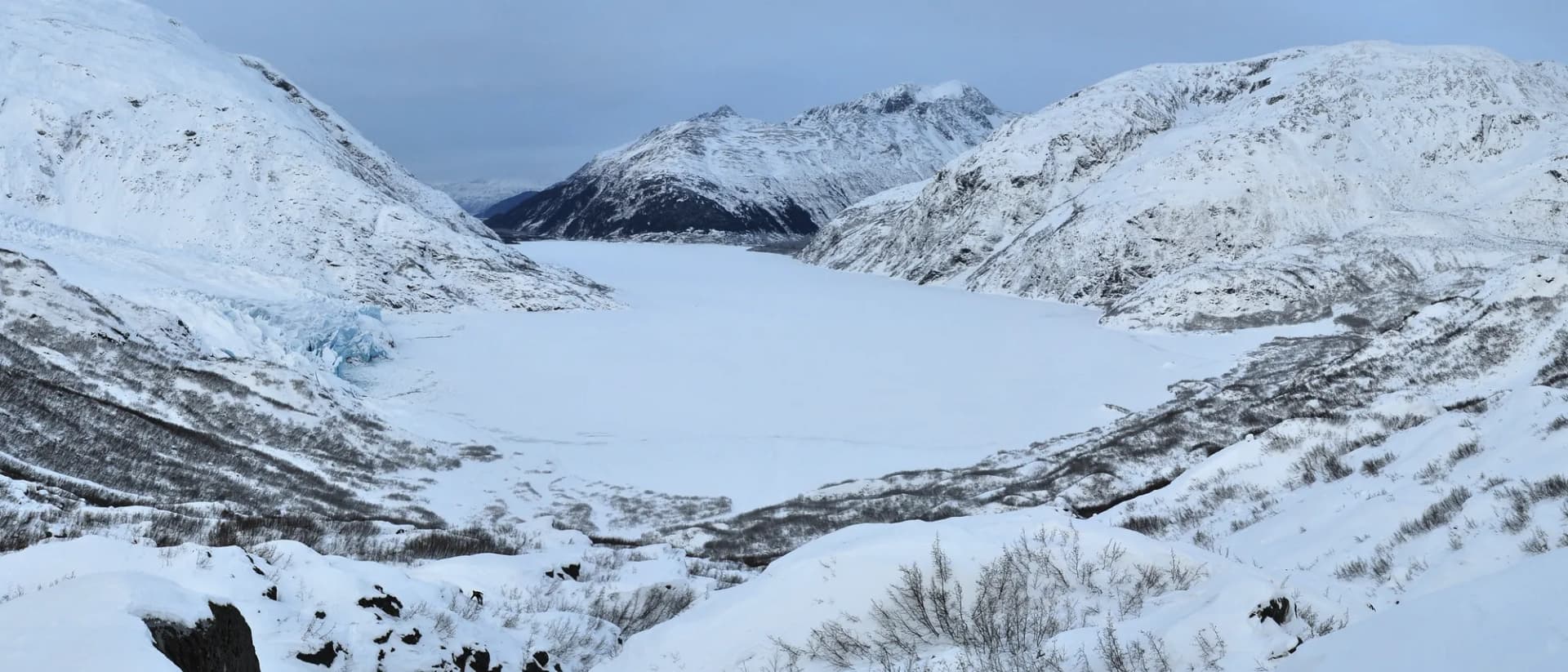
The Heather Meadows area near Mt. Baker allows hikers to reach trail-accessible viewpoints of active glaciers including the Coleman, Roosevelt, and Boulder Glaciers. The Chain Lakes Loop passes within a few hundred yards of the Mazama Glacier's toe. Nowhere else in Washington can hikers reach this kind of volcanic alpine terrain without ropes or crampons. The trade-off is a short season: most high routes are only snow-free from mid-July through September.
Old-Growth Temperate Rainforest
The western lowlands of the forest receive 100 to 150 inches of annual precipitation, supporting one of the most intact old-growth temperate rainforests in the Pacific Northwest. Western red cedar trees here reach 8 to 10 feet in diameter. The Skagit River corridor is among the best bald eagle viewing areas in the continental United States, with hundreds of eagles wintering along the river from November through February to feed on spawning chum salmon.
Wilderness Variety
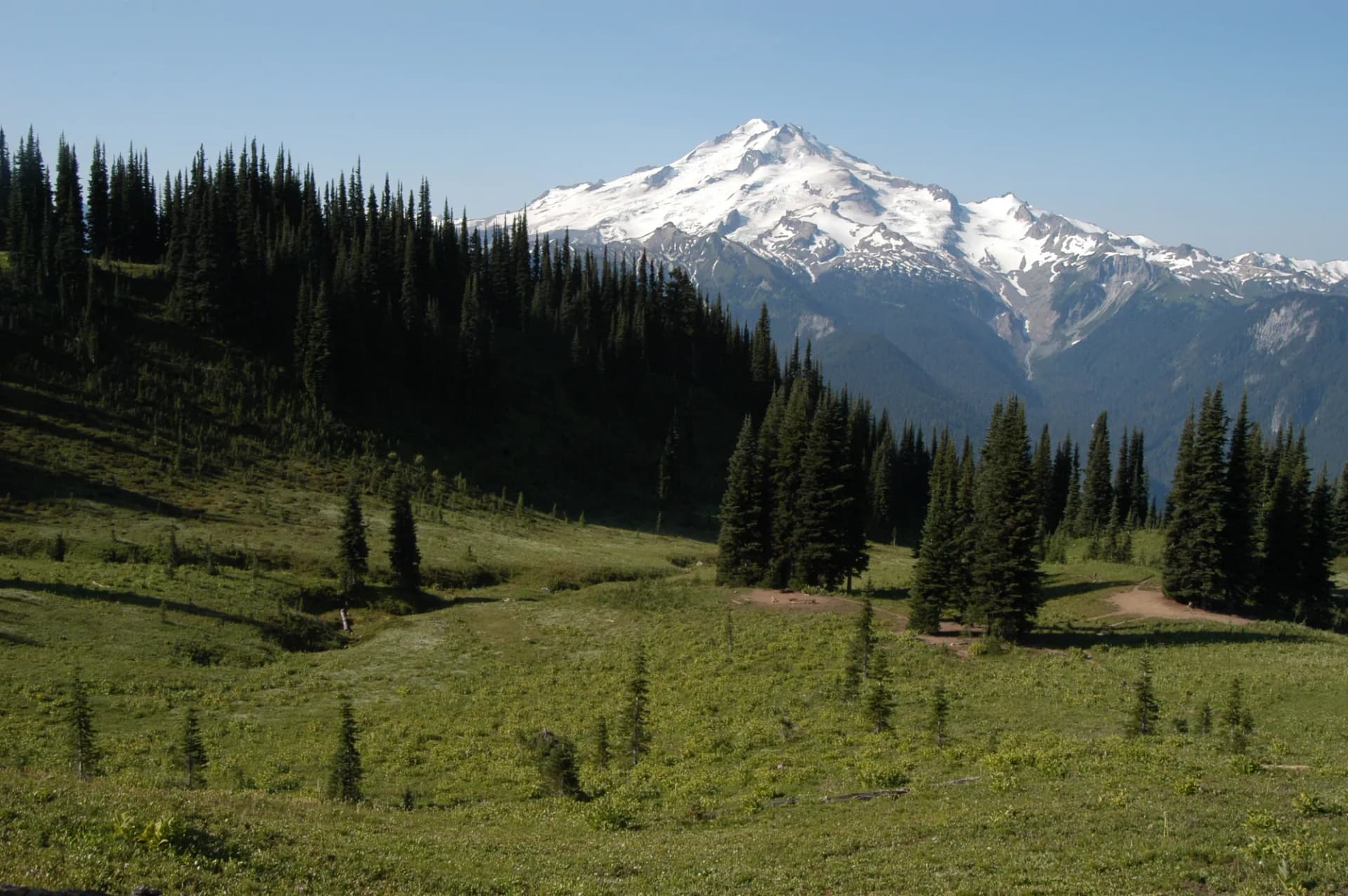
Seven wilderness areas protect different landscapes within the forest. Mt. Baker Wilderness covers volcanic alpine terrain near the summit. Boulder River Wilderness contains some of the best old-growth lowland forest in the state. Glacier Peak Wilderness, shared with Okanogan-Wenatchee National Forest, protects a second active volcano and miles of remote backcountry. Each wilderness has its own character, making the forest genuinely varied for multi-day backpackers.
Best Trails in Mt. Baker-Snoqualmie
Chain Lakes Loop is the signature day hike for the Heather Meadows area. The 7.9-mile loop circles through volcanic alpine terrain past Iceberg, Hayes, and Arbuthnot Lakes, with continuous views of Mt. Baker's glaciated north face. The trail starts from Artist Point at 5,100 feet, which cuts the elevation work considerably. See the full Chain Lakes Loop guide.
Skyline Divide climbs to a sweeping ridgeline at 6,500 feet with views stretching from Mt. Baker east to the Canadian border. The 9.5-mile out-and-back passes through blueberry fields and subalpine meadows before reaching the divide. Late July brings dense wildflower blooms here. Full details at the Skyline Divide trail guide.
Excelsior Peak is a sustained climb through old-growth forest to a former fire lookout site at 5,700 feet. The 8.4-mile round trip gains 2,700 feet. The summit plateau offers panoramic views of the Nooksack River valley and, on clear days, the San Juan Islands. Trail conditions and logistics are at the Excelsior Peak guide.
Twin Sisters is the forest's hardest standard day hike, gaining 4,700 feet over 8.4 miles. The route climbs through forest, then scrambles to the summit ridge of the dunite Twin Sisters massif, a geologically rare rock type in North America. The Twin Sisters trail guide covers the full route and summit approach.
Permits and Passes
A Northwest Forest Pass is required at most developed trailheads in this forest (as of 2026). Day use costs $5 and annual passes run $30. The America the Beautiful Interagency Annual Pass covers the Northwest Forest Pass requirement at federal trailheads. Veterans and active military may be eligible for a free pass; see details at veteran benefits for national forests.
Some trailheads sit on Washington State Department of Natural Resources land and require a Discover Pass instead of or in addition to the federal pass. The forest's trailhead descriptions typically note which pass applies. Self-issue wilderness permits are required for overnight travel in Mt. Baker Wilderness and are available at the trailhead, free of charge (as of 2026).
Camping
The forest has a mix of reservable developed campgrounds and dispersed backcountry camping. Horseshoe Cove and Douglas Fir campgrounds near Lake Shannon fill quickly on summer weekends and reservations through Recreation.gov are common. Both offer typical Pacific Northwest camping in a forested setting near water.
Dispersed camping is permitted throughout most of the forest outside designated campgrounds, provided you follow Leave No Trace guidelines and camp at least 200 feet from water sources and trails. Review the Leave No Trace principles before a backcountry trip. Hannegan Campground, near the Nooksack Ridge and North Cascades boundary, is first-come first-served and a popular base for multi-day trips into the Pickets.
For trips requiring a reservation or permit overview, the national forest camping permit guide covers the process.
When to Visit
July through September is the reliable hiking season for high trails. Snow often covers routes above 4,000 feet through mid-July in an average year and well into August in heavy snow years. The Heather Meadows area (Artist Point) is sometimes not plowed until late June or early July. Check current road conditions through the Mt. Baker-Snoqualmie Ranger District before driving up.
Lower elevation trails like the North Fork Nooksack and Skagit River corridors are accessible year-round in most years, though winter brings heavy rain and occasional flooding. Fall colors in the lowland forests run from late September through October. Winter closes most forest roads above about 2,500 feet.
Weather at elevation can change quickly at any time of year. August afternoons frequently bring thunderstorms over the higher ridges. Snow has fallen at Artist Point in every month of the year.
Getting There
From Bellingham: Take I-5 south to Exit 255 (Burlington), then follow Highway 20 east to Sedro-Woolley, or continue on I-5 north to Bellingham and take Highway 542 (Mount Baker Highway) east toward Glacier and the Heather Meadows area.
From Seattle: I-5 north to Burlington (Exit 230), then Highway 20 east for Skagit River valley trailheads, or continue north to Bellingham and take Highway 542 for Mt. Baker trailheads.
Gas and supplies are available in Glacier (small selection), Concrete, and Sedro-Woolley. The town of Glacier on Highway 542 has a ranger district office, a small grocery, and seasonal food options. Plan to carry what you need for the day.
Practical Tips
- Artist Point Road (the final stretch of Highway 542 to Heather Meadows) typically opens in early to mid-July. Check road status before making the drive.
- The Mt. Baker Ski Area operates in winter and the chairlifts do not provide hiker access in summer.
- Cell service is unreliable above about 3,000 feet throughout the forest. Download offline maps.
- Black bears are active across the forest in summer and fall. Store food properly and review bear canister requirements for multi-day trips.
- Wildfire smoke from eastern Washington and British Columbia occasionally affects air quality in late summer. Check current conditions before heading out.
Planning Your Trip
The Mt. Baker Ranger District office in Sedro-Woolley handles permits and trail information for the northern portion of the forest. The Snoqualmie Ranger District covers the south. Both maintain updated trail condition reports on their websites during hiking season.
For multi-day trips, popular routes include the Ptarmigan Ridge approach to Mt. Baker's Coleman Glacier and the Nooksack Ridge traverse connecting to North Cascades. Both require strong navigation skills and should not be attempted without experience in glacier travel.
The national forest vs. national park comparison article explains the key differences in rules and facilities between this forest and adjacent North Cascades National Park, which shares a long eastern boundary with Mt. Baker-Snoqualmie.