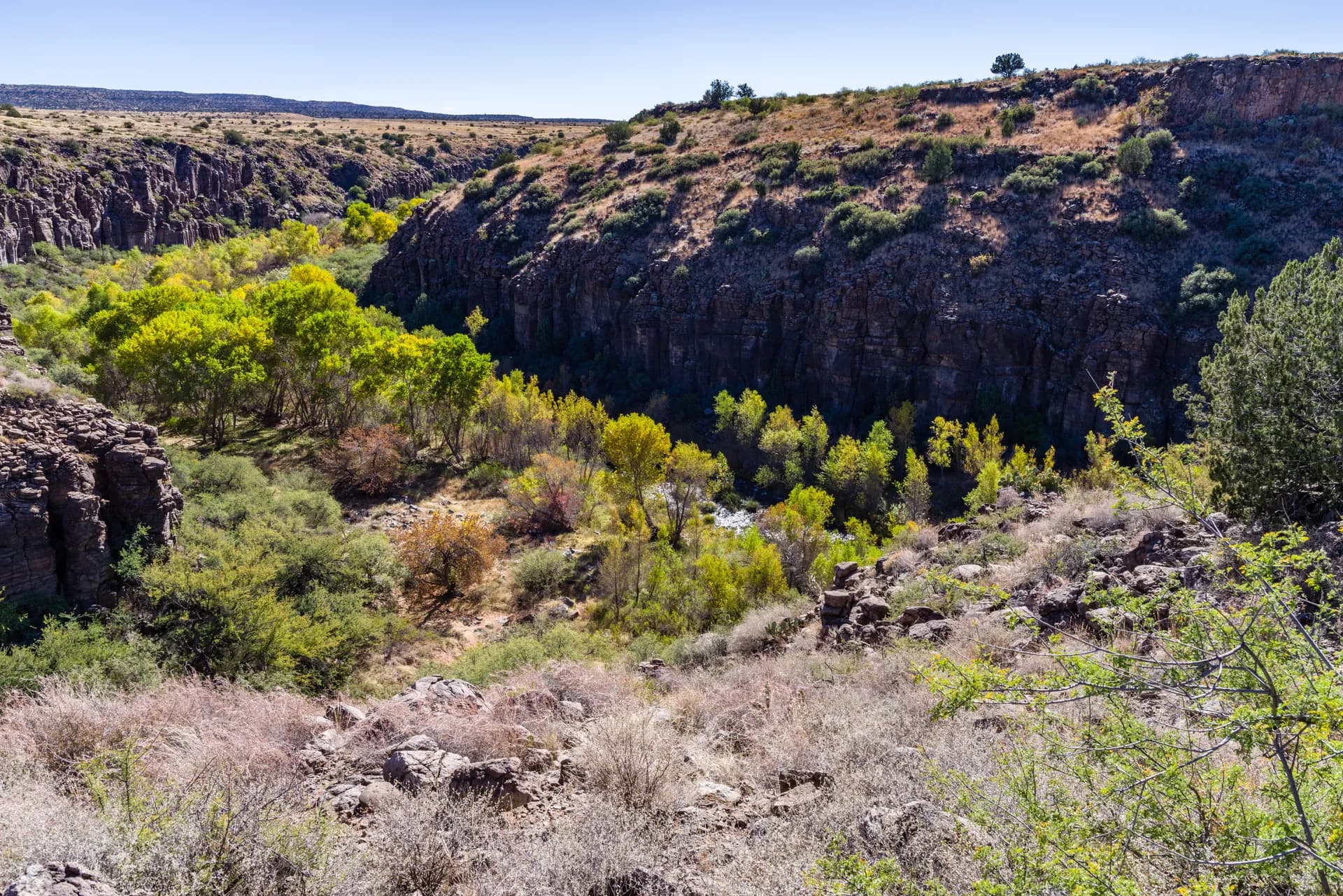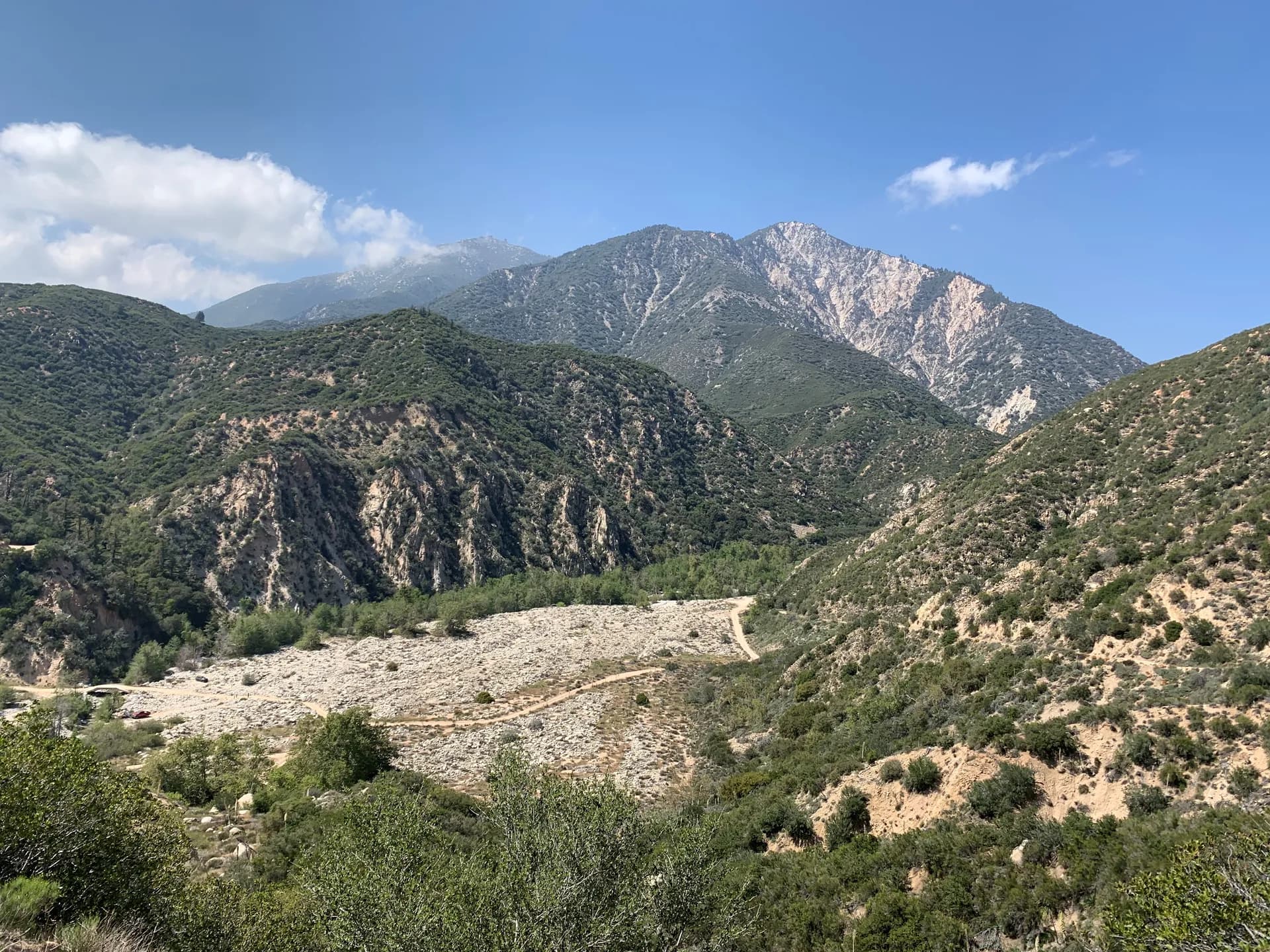
San Bernardino National Forest spreads across 823,816 acres of the San Bernardino and San Jacinto mountain ranges in Southern California, rising abruptly from the desert floor and the Los Angeles basin. For hikers based in the city, our best hikes near Los Angeles guide covers how San Bernardino fits into a Southern California hiking plan. At its highest point stands San Gorgonio Mountain at 11,503 feet, the tallest peak in Southern California. The forest sits less than two hours from downtown Los Angeles and serves as the primary mountain escape for tens of millions of Southern California residents, which means it handles extraordinary visitor pressure on weekends. Plan accordingly.
The forest spans two distinct geographic units. The San Bernardino Mountains section includes Big Bear Lake, the resort town of Big Bear, and the San Gorgonio Wilderness. The San Jacinto Mountains section, accessed from the Hemet/Palm Springs side, includes the San Jacinto and Santa Rosa wilderness areas and connects to the PCT corridor through the desert transition zone. These units have different characters: the San Bernardino Mountains feel more like a classic mountain forest with pine trees, lakes, and ski resorts, while the San Jacinto range drops dramatically into the Coachella Valley with near-vertical escarpments and extreme elevation changes.
Getting There
The two main access corridors are Highway 18/38 from the Inland Empire to the Big Bear area, and Interstate 10 with various exits leading to the southern and western portions of the forest.
From Los Angeles, the most common route to Big Bear Lake runs east on I-10 to Redlands, then north on Highway 38 through Mentone and along the Santa Ana River Canyon. This approach climbs steadily and takes about 2 to 2.5 hours depending on traffic. The alternative is Highway 18 (the "Rim of the World Drive") from San Bernardino through Running Springs, though this route has more curves and can back up on weekends.
For the Icehouse Canyon and Cucamonga Peak area on the western edge, take I-10 to the Mountain Avenue exit in Upland, then north on Mountain Avenue through Upland, drive through the neighborhood, and connect to Mt. Baldy Road, which leads to the trailhead at Icehouse Canyon. This trailhead is about 50 miles from downtown LA.
For San Gorgonio Wilderness, the main trailheads are in Forest Falls (Vivian Creek Trailhead) and at the South Fork Trailhead off Highway 38 east of Big Bear Lake. Cell service is spotty throughout the forest, so download offline maps before you go.
Top Trails
San Bernardino's trail system spans easy interpretive walks, family-friendly lake loops, and some of the most demanding summit routes in Southern California. Here's a range of the best.
The Vivian Creek Trail is the direct route to San Gorgonio's summit from Forest Falls. It covers 17.3 miles round trip and gains nearly 5,840 feet, making it the most strenuous hike in the forest. This is serious mountaineering-adjacent terrain with sustained switchbacks above treeline and a rocky summit plateau. A free wilderness permit from the San Gorgonio Wilderness Association is required.
The Dollar Lake Trail provides a more accessible introduction to the San Gorgonio Wilderness for backpackers. Starting from the South Fork Trailhead on Highway 38, the trail reaches the alpine lake at 9,300 feet in about 11.4 miles round trip with 2,926 feet of gain. It's a strong overnight choice for hikers not ready for the summit push.
The Cucamonga Peak Trail via Icehouse Canyon on the western side of the forest is a 12-mile round trip with 4,300 feet of gain to a summit at 8,862 feet with panoramic views across the Inland Empire and down into the Mojave. This is a popular but demanding day hike.
The Cougar Crest Trail near Big Bear Lake is the area's best moderate hike: 4.8 miles round trip, 720 feet of gain, and views across Big Bear Lake that stretch into the Mojave Desert. It connects to the PCT at its endpoint.
The Castle Rock Trail offers a quick and family-accessible scramble to a granite outcrop above Big Bear Lake, covering about 2.8 miles round trip with roughly 570 feet of gain. It's a short outing with better views than the mileage would suggest.
Deep Creek Hot Springs is a remote and popular destination accessible via the Bowen Ranch route, about 4 miles round trip with roughly 900 feet of elevation change descending into a canyon where natural geothermal springs meet the creek along the Pacific Crest Trail corridor.
The San Gorgonio via South Fork Trail is the longer, more gradual route to the 11,503-foot summit from the South Fork Trailhead on Highway 38. At 19.1 miles round trip with 4,708 feet of gain, it covers more ground than the Vivian Creek approach but divides more naturally into a two-day backpacking trip with camps at South Fork Meadows and Dollar Lake along the way.
The Champion Lodgepole Pine Trail is a short (1.4-mile round trip) interpretive walk on the south side of Big Bear Lake that leads to the largest recorded lodgepole pine in California. It's a good leg-stretcher and a genuinely impressive natural feature for those who appreciate trees.
Camping
San Bernardino has dozens of developed campgrounds and allows dispersed camping in many forest areas outside designated wilderness zones.
Serrano Campground is the flagship lakeside option, sitting on the north shore of Big Bear Lake in Fawnskin. With 109 sites (both tent and RV), full hookups available, and spectacular lake and mountain views, it's the most popular campground in the forest. Nightly rates ran $44 to $91 depending on site type as of early 2026 — verify current fees at Recreation.gov before booking. Reserve through Recreation.gov; it books up fast for summer weekends.
Heart Bar Family Campground off Highway 38 near Angelus Oaks has 74 sites and sits at about 7,000 feet elevation near the Santa Ana River headwaters. It's well-positioned for backpackers entering the San Gorgonio Wilderness via the South Fork Trailhead. Season runs July through October. Reservations are available through Recreation.gov.
Hanna Flat Campground on the north shore of Big Bear Lake offers 88 sites in a quieter setting than Serrano, at roughly $28 per night as of early 2026 — verify current fees at Recreation.gov. It's a good base for hikers using the Cougar Crest and PCT trailheads. Open May through September.
Dispersed camping is allowed on national forest land away from developed sites, water sources, and wilderness zones with specific restrictions. Bring all water or treatment equipment, pack out all trash, and keep camp at least 200 feet from streams and lakes.
Permits and Fees
The Adventure Pass ($5/day or $30/year as of early 2026 — verify current fees before visiting) is required at most developed parking areas in the San Bernardino, Angeles, Los Padres, and Cleveland national forests. You can purchase it at ranger stations, outdoor retailers, and online. The America the Beautiful Interagency Annual Pass is accepted in place of the Adventure Pass. For details on how these passes interact with various recreation benefits, see our guide to the America the Beautiful pass.
The San Gorgonio Wilderness requires a free wilderness permit for all day hikes and overnight trips. These are managed by the San Gorgonio Wilderness Association (sgwa.org) and are subject to quotas. Reserve online up to 90 days in advance. Peak weekends and holidays fill quickly. The Cucamonga Wilderness also requires a free wilderness permit; these can be obtained from the SGWA permit system as well.
For overnight trips, you must follow Leave No Trace principles and camp at least 200 feet from water sources. Campfires may be restricted or prohibited depending on fire conditions; check the forest website or call the local ranger district for current restrictions before any trip.
Wildlife and Ecology
The forest spans a striking elevation gradient, from the desert scrub of the lower San Jacinto foothills to the alpine tundra above 10,000 feet on San Gorgonio. This range produces exceptional wildlife diversity.
Mammals: Black bears are common in the Big Bear area and throughout the forest. Mule deer are seen frequently at most elevations. Mountain lions inhabit the forest but are rarely encountered. Bighorn sheep occupy the rocky terrain in the San Jacinto and Santa Rosa wilderness areas. California ground squirrels and Steller's jays will find your snacks at any campsite.
Birds: More than 300 bird species have been recorded in the forest. Golden eagles hunt the open ridges. The endangered California spotted owl nests in old-growth stands. Peregrine falcons breed on cliff faces in the San Jacinto range. Migratory songbirds pass through in spring and fall.
Flora: The forest transitions through chaparral, black oak-ponderosa pine woodland, Jeffrey pine forest, lodgepole pine stands, and subalpine whitebark pine zones as elevation increases. The San Bernardino Mountains contain several rare plant species, including the San Bernardino Mountains bladderpod, found nowhere else on earth.
Best Time to Visit
Summer (June through September): Prime season for the high country. Snow clears from most San Gorgonio trails by late June, though the summit area can hold ice into early July in heavy snow years. Big Bear Lake hikes are accessible from May. Afternoon thunderstorms are common in July and August, especially over the higher peaks. Start early and plan to be off exposed ridges by early afternoon.
Fall (October through November): Excellent conditions with thinning crowds. Aspens and black oaks put on a modest color display in late October. Night temperatures drop quickly at elevation. Most campgrounds close by early November.
Winter (December through March): Big Bear Mountain Resort and Snow Valley offer downhill skiing and snowboarding. The lower elevation trails around the Inland Empire side of the forest remain accessible year-round, though ice and snow are possible on north-facing slopes. Highway 18 and 38 can close during major snowstorms.
Spring (April through May): The wildflower season in the lower chaparral and foothills is excellent, with lupine, poppies, and ceanothus blooming. Higher trails are often still snow-covered. It's a good time for lower-elevation hikes and to avoid summer crowds.
Tips for Your Visit
Start before 7 AM on summer weekends. Popular trailheads including Cougar Crest, Vivian Creek, and Icehouse Canyon fill to capacity early. The overflow situation at Big Bear area trailheads is particularly bad. Weekday visits are considerably more relaxed.
Secure your San Gorgonio permit well in advance. The wilderness permit quota fills for peak summer weekends months ahead. If you don't have a permit, you cannot legally enter the San Gorgonio or Cucamonga wilderness areas. Reserve at sgwa.org.
Carry water and know your sources. Many trails are dry, particularly on the chaparral sections in the lower forest. Many hikers carry 3 or more liters per person for half-day hikes, and more for longer routes. Individual hydration needs vary based on body weight, pace, and temperature. Treat or filter all backcountry water sources.
Prepare for altitude. San Gorgonio summit sits at 11,503 feet. Wilderness medicine guidelines suggest that altitude-related illness is a real concern for visitors ascending rapidly from sea level. Spending a night at Big Bear elevation before attempting the summit is one commonly recommended approach. Consult your physician if you have medical concerns about altitude.
Know the fire restrictions. Southern California has severe wildfire risk. The forest may prohibit all campfires and sometimes even camp stoves during extreme fire conditions. Check the current fire restriction status at the forest website before any trip. Violations carry significant fines. Our national forest camping permit guide covers fire permit requirements in more detail.
Use bear canisters in the backcountry. Bears in the Big Bear Lake area are habituated to human food. Developed campgrounds have bear boxes; use them. In the backcountry, a bear canister is required in some zones and strongly recommended everywhere. Review bear canister requirements before your trip.
Cell service is unreliable. Download offline maps and trail data before leaving cell coverage. The Big Bear Lake town area has good service, but most trailheads and backcountry areas do not.